THREE BARNS DESTROYED IN $20,000 FIRE
Local and Milltown Firemen, in Heroic 3-Hour Battle, Saved Beautiful Home and Snuff Mills of Jas. M. Parsons in North Brunswick – Origin is Unknown – All Live Stock Employees Save
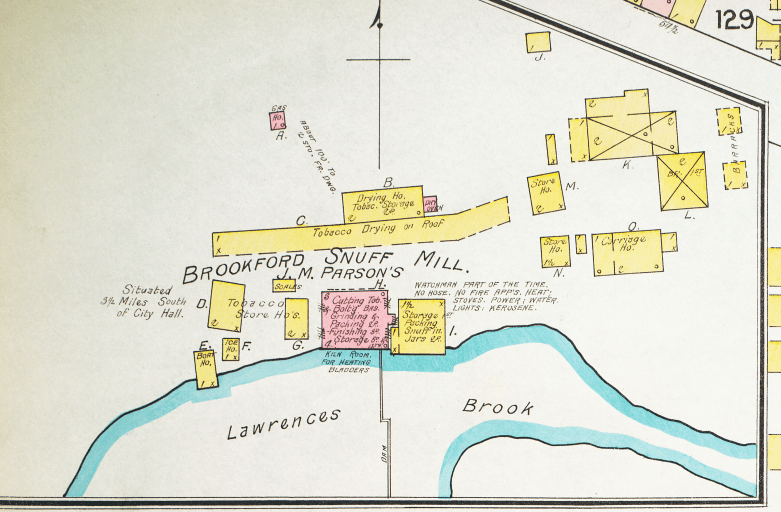
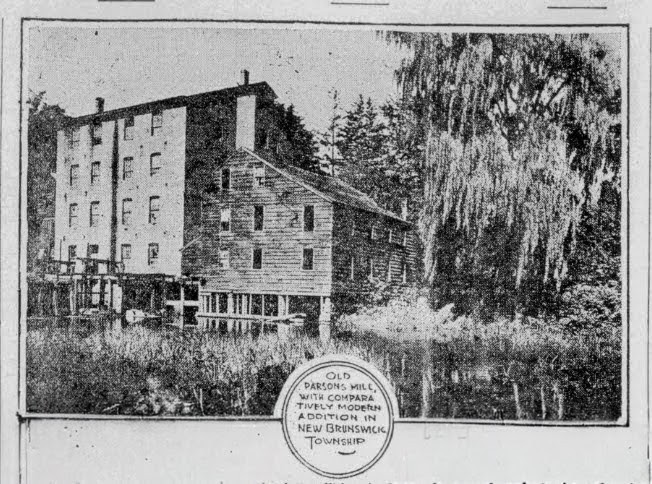
Heroic work on the part of Captain George J. Kuhn, Jr., and his men of Engine Co. No. 1, saved the beautiful home and the big snuff mills of James M. Parsons, in North Brunswick township from being destroyed by fire yesterday afternoon, when fire was discovered in one of the barns nearby, at 3:30 o’clock. Workmen at the place quickly formed a bucket brigade in an effort to check the fire, but it was soon seen that they were unable to handle the fire which was quickly enveloping the barn, and fearing that it would spread to the big snuff mills and to the Parsons home, word was sent to this city and Milltown for help.
Assistant Chief Sass, who was on duty yesterday, Chief Francis being away, received the message and under the rule recently adopted by Common Council it was understood that no fire apparatus was to be sent out of the city, was unable to give any assurance as to whether or not they could do anything but he promptly got in touch with the new fire commissioners and they dispatched Liberty Engine Co. No. 1, with Captain Kuhn and five men to the scene. It took the big Waterous auto just eight minutes to make the run and running the engine close to the Parsons pond, soon had water on the fire, which by this time had spread to another barn.
Milltown firemen also responded with their chemical automobile and did excellent work about the other buildings, but the big engine pumping a stream of water on the flames was the means of saving the big snuff mills, the tobacco house, and the Parsons home, and for three hours, without a hitch, she worked like a charm.
Assistant Chief Sass went with the firemen and directed the work for a time, but on account of the absence of Chief Francis he had to return to this city after the work had been started and Captain Kuhn and his men worked like trojans, receiving very little assistance from those about the place, and when they had completed their work they were pretty well exhausted. Five men to work an engine, take care of the nozzle, pull the hose here and there was no easy task, but they never flinched once to the duty they had been called to perform, but clearly demonstrated that more men are needed in the department.
Just how the fire started is a mystery. The buildings being of frame it did not take long for the fire to eat its way through the building and leap to the next building. The contents of the barn that were movable were all saved by the men of the snuff mills, but a large quantity of wheat was destroyed.
The barns were completely burned to the ground. It was about six o’clock when the local firemen had stopped work on the fire and they returned about 8 o’clock.
Commissioners Harry J. Rolfe and James M. Barkelew were out to the fire in the automobiles and looked after the local firemen.
Damage Near $20,000.
There were three buildings burned to the ground. All were closely located. Louis Rebeck, in conversation with a Home News reporter last night said that he could give no cause for the fire. He said the mill employees fought the fire with pails of water after it had been discovered by Theodore Applegate. Mr. Applegate smelled smoke, and investigated and found the barn aflame. He called the others. The flames soon spread and then the employees got busy and saved all the live stock. They met with considerable difficulty in saving the pigs, which darted for the flames. A number of handsome sleighs belonging to Mr. Parsons were destroyed.
Mr. Parsons was away at the shore near Atlantic City, and last night had not yet been notified of the fire. Communication with him failed because he was out on his yacht. The damage, as was estimated last night, will be about $20,000, covered by insurance.
About twenty men are employed in the snuff mill, which was saved.
Big Kick
Considerable comment was expressed by many on the fact that the commissioners had allowed the apparatus to go outside of the city limits, it having been clearly understood that no city apparatus should leave the city to help outside communities. This was done because of the attitude of several townships towards the city when they wanted something and if help did go it was felt that the township should pay for the services.
Recently in Elizabeth, the Keans asked for help from the Elizabeth department, but they were refused, being out of the city limits.
The commissioners however are now in charge and they of course felt that it was a case of giving help or the burning down of the mills and other property, which would have thrown out of work a large number of men.
Ruins Aflame All Night.
Though the firemen left the scene between 7:30 and 8 o’clock, there was still plenty of fire in the ruins, and every gust of wind stirred up the fire again and sent showers of sparks in all directions, endangering the Parsons’ home and the mill. Shortly after 9 o’clock last night the Milltown firemen were again called to the scene.
The flames from the ruins illuminated the sky all night, and there was still fire this morning.
The engine of Co. No. 1, of this city, almost pumped the pond dry of water.
Michelin Sounds Alarm.
The Michelin fire whistle was sounded at 12 minutes of four yesterday and before four minutes had elapsed the Eureka Fire truck was passing the Michelin Tire factory bound for the scene of the disaster. The truck was driven by Chris Jensen, a member of the Milltown patrol. Foreman Elwood Boice, first assistant J. M. Brindle and second assistant Martin Mueller, of Eureka Fire Company, were among the first to appear on the scene.
It was a fortunate occasion that the wind was west yesterday and in case it had been blowing in the opposite direction the damage would undoubtedly have been very much greater.
Some of the Milltown firemen that were unable to get on the fire truck ran all the way to Parsons’ and by the time they reached there were about exhausted. Foreman Boice and Charles Christ were the first to climb a ladder on one of the buildings used as a storehouse. They stuck to their post fighting the fire from one side of the roof until the opposite side caved in and they were forced to move. C. Christ had his arm cut while sliding down a ladder.
The firemen realized that it was useless to try to save the main barn and wagon shed where the fire first started and thus played on the surrounding buildings until they felt sure it would not spread any further.
Among the Milltown fire fighters other than those already mentioned were ex-fireman Aubrey Kuhlbau, Oscar Harkins, of the Patrol, Messrs. Charles Christ, William Beecher, George Crabiel, George Lowne, Daniel Brown, John Miller, George Hoffer, George Heyl, John Deutsch, H. Christ, Aurendon, Charles Anderson, Charles Denhard, and George Knoll.
John Christ, Charles Denhard, proprietor of the Hotel Denhard, was hit in the head with a flying board at the fire yesterday, but the injury is not serious.