MICHELIN CO. TO HAVE STRING OF SALESROOMS
Will Have an Individuality About Them -1,000 Now Employed at Milltown.
The world’s record of one hundred miles in 1:12:56 was established by a Renault car, driven by Brenin, and equipped with American made Michelin tires at the auto races held at Ormond Beach, Fla., recently.
The tires with which the car was equipped were made at Milltown. The newly established record, which speaks highly for the Michelin tire, gives an average of 81 7-100 miles per hour.
Despite the financial pressure of late, the factory at Milltown has been working day and night in an effort to get ahead with orders on hand. Over a thousand people are employed at the factory now and more are being taken on daily.
The company expects to open salesrooms in connection with the New York branch at 1763 Broadway, and the decorations of the new salesroom will excel any of those in the auto quarter wherein the new branch store is to be located.
The salesrooms of the Michelin Company throughout the United States will have their own individual design so that they can be instantly recognized. The walls, counters and painting of the various salesrooms will be of the same hue. The colors of the signs of the company which have been plentifully distributed about the country are blue and yellow.
The Michelin Company have now six salesrooms, Boston, New York, Buffalo, Detroit, Cleveland and Chicago. Salesrooms will be opened shortly at Philadelphia, San Francisco and Denver.
Now for an analysis….
At the beginning of the twentieth century the Michelin Tire Company embarked on an ambitious attempt to establish itself within the rapidly expanding American automobile industry. The decision to create a manufacturing base in Milltown, New Jersey in 1907 represented a decisive step in Michelin’s broader strategy of international expansion. During this period the French company established subsidiaries in key global markets, including Great Britain, Italy, and the United States, with the Milltown plant serving as the center of Michelin’s American production from 1907 until 1930.
Milltown offered a strategic location for the company’s American operations. Situated in Middlesex County along the Lawrence Brook and less than thirty miles from New York City, the town provided access to rail transport, waterways, and major commercial networks connected to the Atlantic seaboard. The factory complex occupied several hectares and included multiple industrial buildings capable of producing pneumatic automobile tires for the growing American market.
The establishment of the Milltown plant reflected Michelin’s determination to participate directly in the transformation brought about by the automobile. In the first decade of the twentieth century the American tire industry was expanding at an extraordinary pace as automobile production increased and new manufacturers entered the field. Michelin, already well known in Europe for its innovations in pneumatic tire technology, sought to translate its reputation for engineering excellence into success in the United States.
One of the most effective ways tire companies demonstrated the performance of their products during this era was through automobile racing. Before the construction of permanent racing circuits, early speed competitions were frequently held on the hard-packed sands of Florida’s Atlantic coast, particularly at Ormond Beach, which later became closely associated with the racing traditions of nearby Daytona Beach. These beach races attracted international attention and provided manufacturers with an ideal stage to showcase the durability and speed of their vehicles and tires.
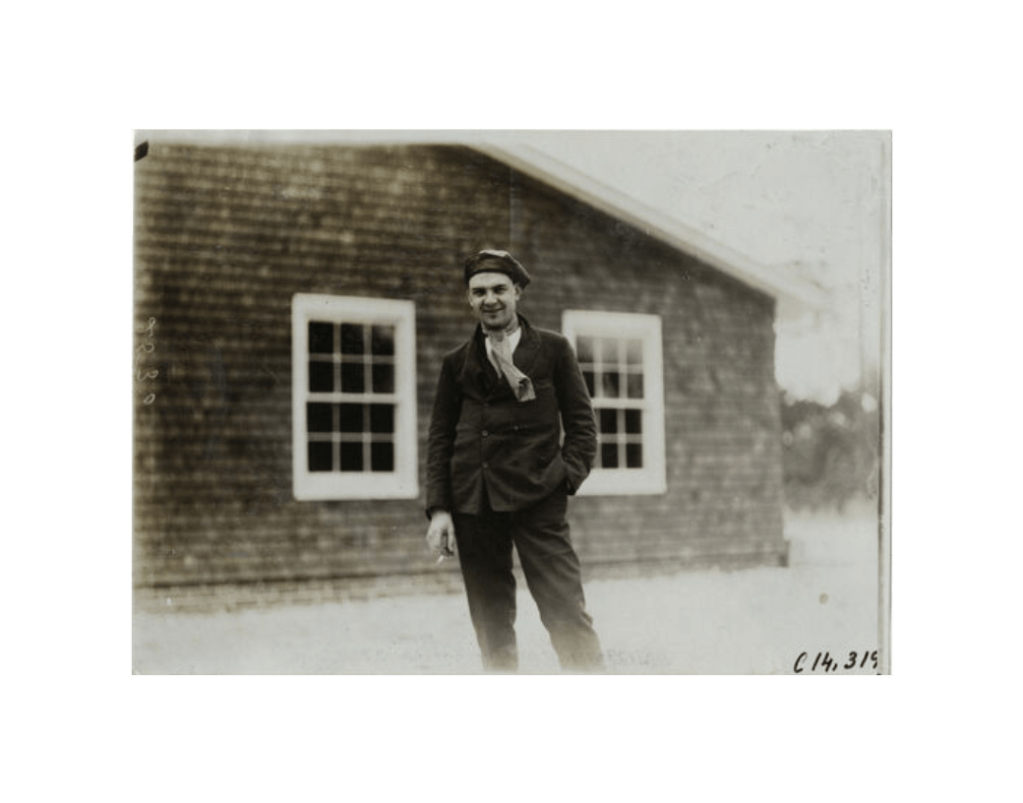
Contemporary reports describe a record-setting run at Ormond Beach in which a Renault automobile equipped with Michelin tires manufactured at the Milltown factory achieved a remarkable speed record over a one-hundred-mile distance. Such events were not merely sporting spectacles but carefully publicized demonstrations of industrial capability. By emphasizing that the tires used in the race were produced in the United States at the Milltown facility, Michelin was able to promote its American-made products while reinforcing the prestige of the brand. Racing achievements thus served as a bridge between technological performance and commercial promotion.
At the same time that Michelin was promoting its tires through racing successes, the company was constructing a national commercial presence through a network of salesrooms and distribution centers. The early automobile industry was concentrated in urban districts where manufacturers, parts suppliers, and dealerships clustered along prominent commercial streets. These areas became known as “Automobile Row” districts, and they represented a new form of urban retail landscape created by the rise of the motorcar.
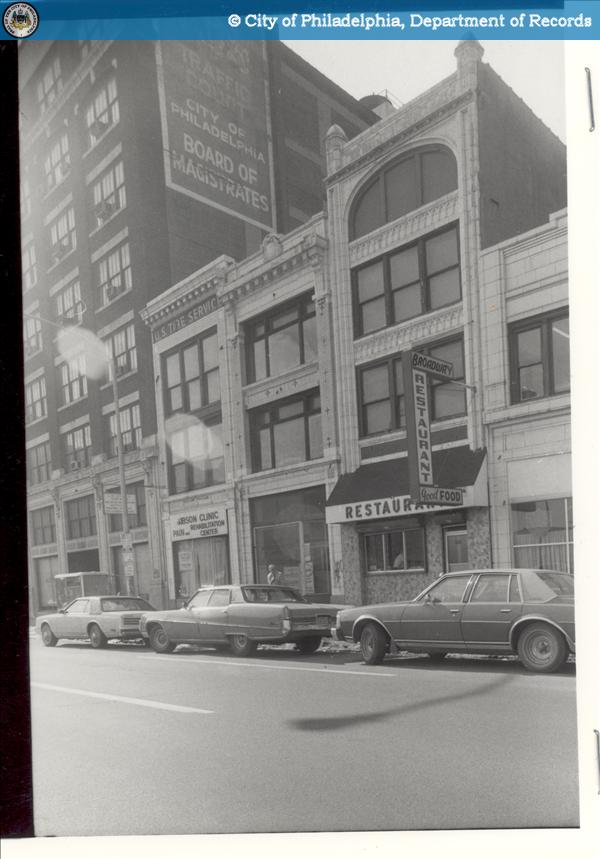
Cities across the United States developed such automotive corridors, and Philadelphia’s North Broad Street became one of the most notable examples. By the early twentieth century the street had evolved into a dense concentration of automobile showrooms, repair facilities, and suppliers of related equipment such as tires and accessories. Michelin’s commercial strategy involved placing branded salesrooms within these districts so that motorists could encounter the company’s products alongside the rapidly expanding array of automobiles entering the American market.
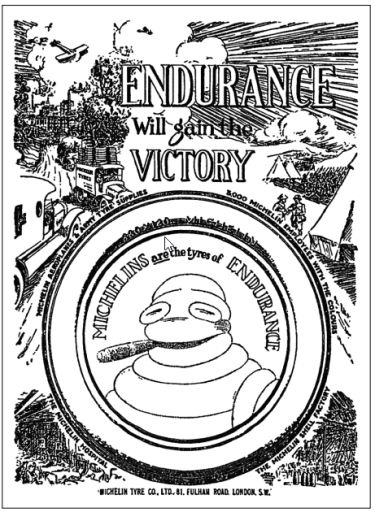
The presence of Michelin offices and salesrooms in cities like Philadelphia demonstrates how the company attempted to integrate itself into the infrastructure of American motoring. These locations served not only as retail outlets but also as centers for advertising and brand visibility. The distinctive colors associated with Michelin—blue and yellow—and the recognizable figure of Bibendum, the Michelin Man, helped the company create a consistent identity across its growing network of urban showrooms.
Although much of the physical infrastructure of these early automotive districts has disappeared, traces of their history remain embedded in the urban landscape. In Philadelphia, for example, the legacy of North Broad Street’s Automobile Row has been documented through historical research and preservation efforts, including those highlighted by Hidden City Philadelphia, which examines the surviving buildings and architectural remnants of the city’s early automotive industry.

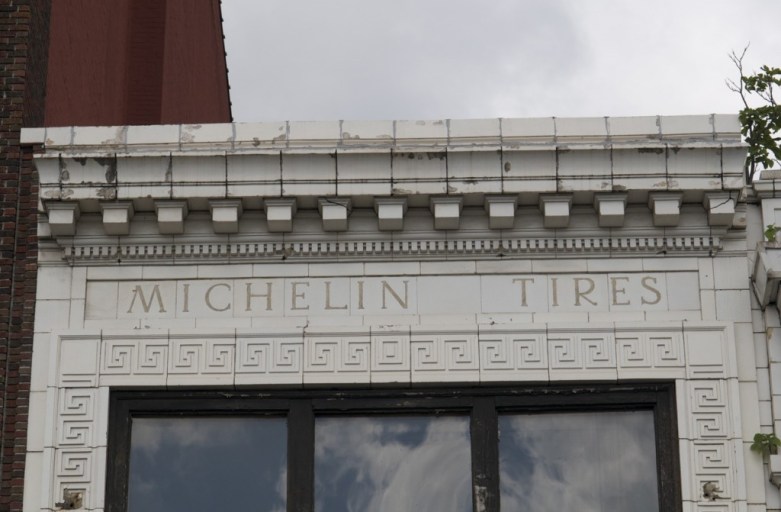
Michelin Tires – 802 N Broad Philadelphia – Hidden City – Peter Woodall https://hiddencityphila.org/2011/09/auto-zone/


When viewed together, the stories of Milltown, Ormond Beach, and Automobile Row reveal different dimensions of Michelin’s American venture. The Milltown factory represented the industrial foundation of the enterprise, where tires were manufactured for the American market. The racing events at Ormond Beach demonstrated the technological performance of those products and provided a powerful form of advertising. Meanwhile, the salesrooms located within Automobile Row districts connected Michelin directly to consumers in the urban centers where automobile culture was rapidly taking shape.
These interconnected efforts illustrate the scale of Michelin’s ambitions during its first American expansion. The company invested simultaneously in manufacturing, promotion, and retail distribution, attempting to position itself among the dominant tire manufacturers of the United States. Although the Milltown factory ultimately closed in 1930 after years of intense competition within the American tire industry, the historical record shows that Michelin’s early presence in the United States was marked by considerable innovation and determination.
Today the surviving archival material—from newspaper accounts of racing victories to photographs of the Milltown factory and the remaining architecture of Automobile Row—allows researchers to reconstruct this largely forgotten chapter of industrial history. Through these fragments, the story of Michelin’s early American venture emerges as a compelling example of how global companies sought to navigate the technological and commercial transformations of the automobile age.