This Day in History: January 29th, 1921

This Day in History: January 29th, 1921

TRENTONIAN SAVES LIVES OF 2 LITTLE FOLKS AT MILLTOWN

MILLTOWN, Jan. 29. – Two foreign-born children from South Milltown miraculously escaped death by drowning yesterday afternoon about 4 o’clock in Lawrence Brook when they walked off the ice into the open water near the bridge connecting North and South Milltown.

The water at this point is exceptionally deep and it is still a mystery as to how the two children escaped going to the bottom. It is believed that the clothing they had on kept them floating, as they were in the water up to their necks and at this place the water is at least ten feet deep.

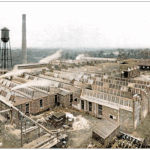
Cries from employees in the Michelin plant brought Earl D. Moore of Trenton, a brother of Druggist Albert Moore of this place, Henry Heusel and Abner Headley to the rescue of the children and Mr. Moore plunged right into the water, grabbed the children and with the able assistance of Mr. Heusel and Mr. Headley, safely brought the boy and girl to shore.

The quick action of Mr. Moore, his splendid nerve and general help, as well as that of Mr. Heusel and Mr. Headley who assisted, are worthy of commendation. The two children walked home, apparently none the worse for their experience and still holding onto their school books.

Good Entertainment.

The literary program given at the Methodist Church last evening was very interesting and a fair-sized crowd enjoyed the program.

The debates were the hit of the evening and the results followed:

“Resolved, That the Public Service is justified in asking for a ten cent fare.” Won by the affirmative speaker, Eugene Reeves.

“Resolved, That women would make better politicians than men,” won by the negative speaker, Joseph Crabiel.

“Resolved, That cosmetics are beneficial to the complexion.” Won by affirmative speaker, Miss Anna Hofer.

“Resolved, That cootie garages or dips are an aid to beauty as well as beneficial to the health.” Won by affirmative speaker, Miss Helen Lindstrom.

Rev. Mr. Sadlos of Bridgeport, Conn., will preach at the Reformed Church tomorrow.


This Day in History: January 28th, 1922

This Day in History: January 28th, 1922

WOMAN APPEARS AS COMPLAINANT AGAINST BAGOYNE

A few minutes after he had gotten off a train here yesterday afternoon, Eugene J. Bagoyne was arrested on George street by Deputy Sheriff Frank P. Kirby on a warrant issued some time ago by Justice of the Peace Charles W. Sedam and which charges fraud.

During October and November 1920, Bagoyne, who is pastor of spiritualist churches in Newark and Elizabeth, is alleged to have obtained from Victoria Okertz the sum of $150 under the pretense that he could by spiritual power get her in communication with her husband, said to be dead.

Mrs. Okertz, who is a resident of Perth Amboy, is complainant in the case. Her husband disappeared some time previous to the alleged experiment with Bagoyne, and it is not known whether he is dead or alive. The complainant alleges that she had no communication with her husband and that the money has not been returned to her.

Bagoyne was arraigned before Justice Sedam and was released under bail. A somewhat similar complaint was made against Bagoyne some time ago while he kept a chapel on Ryder’s Lane near Milltown, but no indictment was found.


This Day in History: January 22nd, 1910

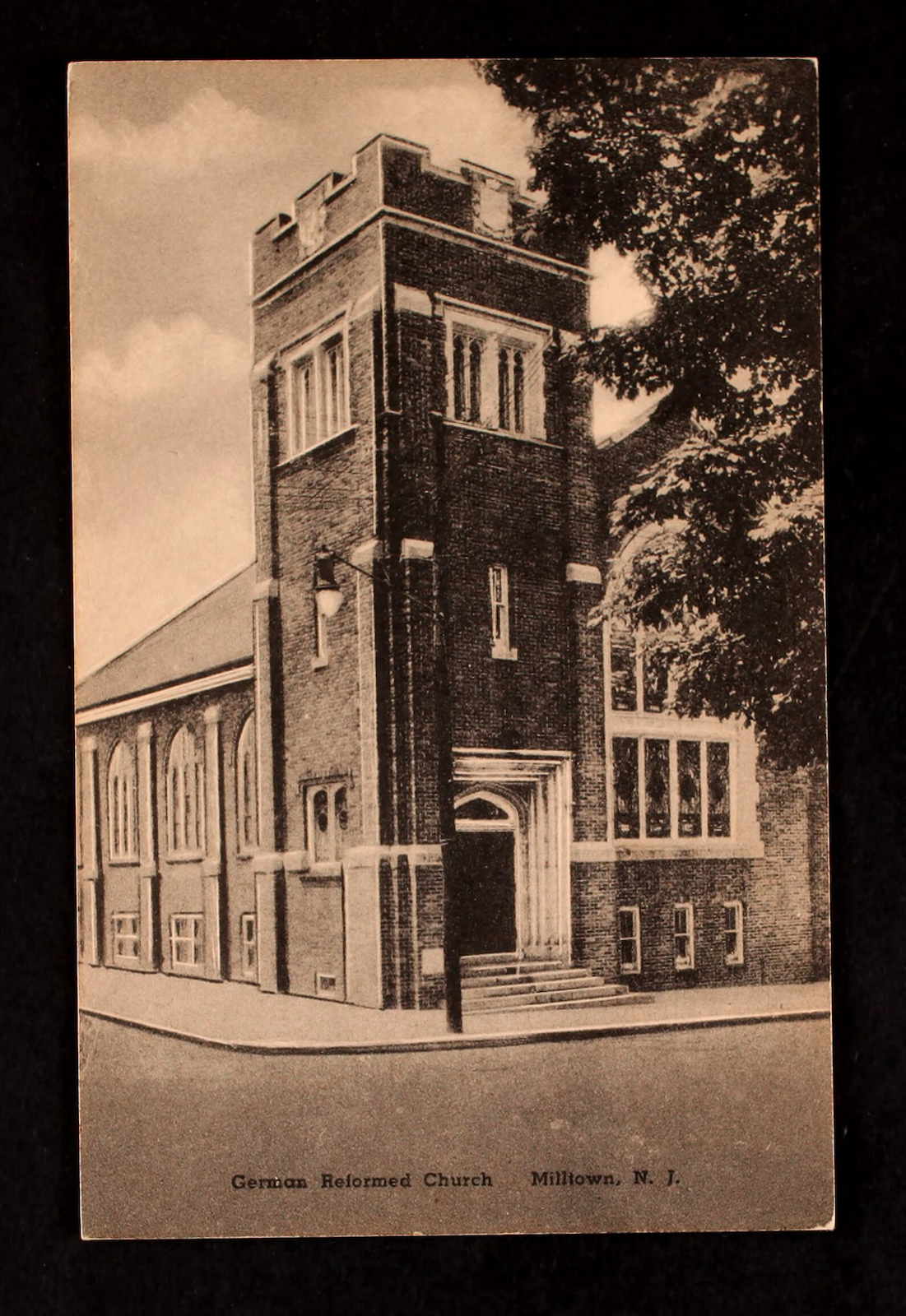
German-Reformed-Church-Post-Card-Milltown, NJ

German-Reformed-Church-Post-Card-Milltown, NJ

IMPROVEMENT TO CHURCH
German Reformed Has New $1,600 Organ—Edifice Remodeled, New Carpets, Steamheating Plant, etc.

MILLTOWN, Jan. 22.—The improvements to the German Reformed Church are about completed. The auditorium has been completely remodeled and an addition has been built on the rear, in which will be placed the new $1,600 pipe organ.

The Ladies’ Aid Society purchased a Brussels carpet for the floor of the auditorium. Henry Christ, the local plumber, installed the steam heating plant in the church. The members now have a house of worship of which they may well be proud. The improvements cost about $5,000.

Rev. Leon Chamberlain will preach a sermon on missions to-morrow morning. His subject will be “The Open Door.” In the evening, Miss Ellfrich, of Haddonsfield, the president of the Camden County Woman’s Christian Temperance Union, will give an interesting talk on W.C.T.U. work. Miss Ellfrich is a fine speaker, and will draw a large audience. Sunday school will be held as usual at 2 p.m. Miss Mabel Schencker will lead the Epworth League meeting at 6:45 p.m.

Services at the German Reformed Church: Sunday school, 9:30 a.m.; morning service, 10:30 a.m.; young people’s meeting, 6:45 p.m.; preaching by Rev. W.F. Barny at 7:30 p.m.

IRVING CRABIEL BREAKS WRIST.
Irving Crabiel, the 12-year-old son of Mrs. Joseph Crabiel, of School street, broke his wrist on Thursday night while coasting on the hill in the rear of the M.E. Church. There was an old iron wagon tire frozen on the side of the hill, and the boy did not see it until his hand had struck it. Dr. N.N. Forney is in attendance.

RED MEN INSTALL OFFICERS.
The Wiekatunk Tribe of Red Men raised their chiefs at their regular meeting last evening. The following officers were installed:
Sachem, George Loun; senior sagamore, Augustus Ruprecht; junior sagamore, Gilbert Gill; prophet, Milton Brindle; chief of records, E.V. Emmons; keeper of wampum, Adam Wagner; trustee, George Heyl; examining physician, Dr. N.N. Forney.

The installing deputy was Max Lemchen, of South River. There were other visitors present from South River.


This Day in History: January 21st, 1914

This Day in History: January 21st, 1914

C.W. WADDINGTON WADE PRESIDENT OF HEALTH BOARD
Organization for 1914 Effected Last Night—Dr. Forney Again Health Inspector—John Hohlhepp Again a Hero.

MILLTOWN, Jan. 21.—Messrs. C.W. Waddington, C.P. Stelle, Adam Wagner, J.M. Brindle, and Dr. N.N. Forney responded to the roll call at a meeting of the Board of Health, held last night at the Borough Hall, for the purpose of organizing for the year 1914.

Mayor William Kuhlthau, Jr., was present, he having been president of this body during the past year, but owing to the fact of his holding the office of Mayor, he had no voice in the meeting last night and C.W. Waddington was appointed chairman and called the meeting to order.

The minutes of the previous meeting were read and adopted.

The election of officers took place, resulting as follows: President, C.W. Waddington; secretary, J. Milton Brindle; treasurer, Adam Wagner. Dr. Forney was elected health inspector.

Mr. Wagner, who was elected to the office of treasurer, is a veteran member of this body, having been appointed on the first Board of Health in the Borough in 1889.

Some two or three years ago, a resolution was passed by the Health Board to hold meetings the second Wednesday of each month, but of late the meetings of this body have been somewhat irregular, and at last night’s meeting it was decided to again hold meetings the second Wednesday of each month.

A communication was received asking that a delegate be appointed to attend the local and State Board of Health meeting to be held in Trenton on Jan. 23d and 24th, but no definite action was taken.

Several small bills were ordered paid.


John Kohlhepp Again Makes a Daring Rescue.

Yesterday was the third daring rescue made by John Kohlhepp in three years, and many of his friends seem to think that he is in line for a Carnegie medal. Mr. Kohlhepp’s third heroic performance took place yesterday afternoon when he rescued from the chilly waters of Lawrence Brook, Miss Grace Fouratt, daughter of Mr. and Mrs. Myron Fouratt, of Sand Street, who had broken through the ice just off the shore.

On the two former occasions his heroic performances were in the rescue of a prominent man in South Milltown.

William Schweindemann, of Washington Avenue, also broke through the ice yesterday, but he was not far distant from the shore at the time and had little trouble to get out himself.


Personal and Other Notes.

Mrs. Anna Holzapfle is quite ill at the home of her daughter, Mrs. Fahrnholz.

Henry Willenbrock is confined to his home by illness.

Frank Hodapp is confined to his home with tonsillitis.

Miss Mildred Wilson is confined to her home with an attack of the grip.

Mr. Clark is confined to the home of her daughter on North Main Street, having had an attack of paralysis.

The regular monthly social of the Epworth League will be held in the lecture room of the Methodist church this evening. All are invited.

The regular mid-week service will be held at the German Reformed Church this evening.

Following the regular business meeting of the Junior Epworth League held yesterday afternoon in the Methodist Church, a social time was enjoyed, various games being indulged in after which refreshments consisting of cake and sandwiches were served.

Members of the local Board of Education anticipate attending a meeting of the Middlesex County Board of Education to be held at Perth Amboy Friday night. A matter of considerable importance to this district is scheduled to be discussed. It is said that a special meeting of the local board will likely be called this week to definitely decide the matter.


White Hens Turn Black.

In an endeavor to protect his highly prized stock of white leghorn chickens from the chilly winter blasts during the past week, William Becker of Milltown placed an oil stove in his chicken coop which for several nights proved very effective. But as he approached the hennery on Sunday morning, very much to his surprise he not only discovered that a number of his fowls had turned black but that they would lay forever. They were dead. A draught evidently caused the flames to rise higher and higher and the stove smoked so as to cause the flames to suffocate a good portion of his stock.


Journeyed to Trenton.

Among those who journeyed to Trenton on Monday night to witness an Eastern League basketball game, Trenton vs. Reading, were Messrs. George Lowne, Charles Fahrnholz, Reuben Hoelzer, and Karl Hermann.


Other Notes.

Owing to his health, Monsieur Jacobs will leave for his former home in France the latter part of this month and is advertising for sale in today’s Home News several articles of furniture which he is desirous of disposing of, and information of which can be obtained upon inquiry of Mr. Charles Hodapp.


In the Quoit League.

Four series were staged in the Crescent Quoit League last night, which resulted as follows:

  • Stelle and Snedeker defeated Kuhlthau and Booream, as well as Jensen and Junker each five straight.
  • Richter and Hermann defeated Kuhlthau and Booream, four out of five.

(See sporting space for account of A.A. A.Y.M.H.A. Midgets basketball game.)


This Day in History: January 19th, 1930

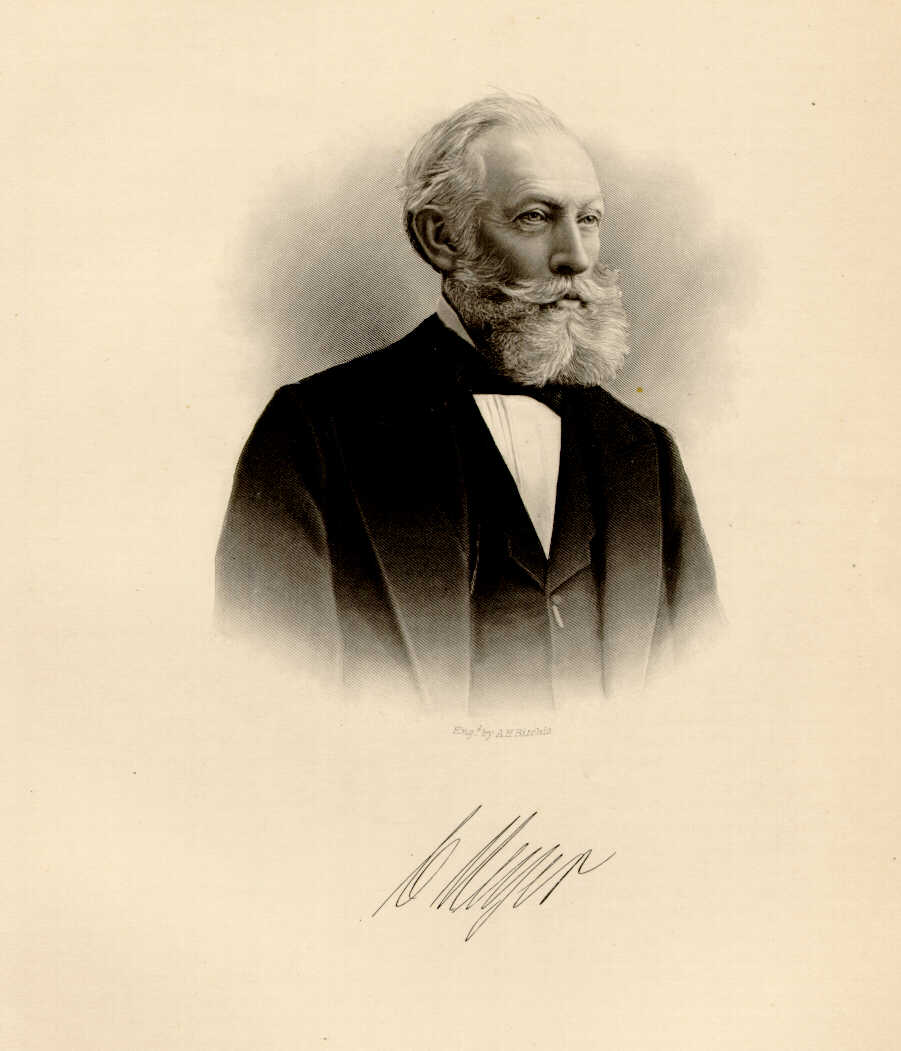
Christopher Meyer 1882

Christopher Meyer 1882

Christopher Meyer, New Brunswick’s Pioneer Rubber Manufacturer


Born in Germany, He Came to This Country When Fifteen and Soon Climbed Ladder of Success: His Industries Here And in Milltown Were Forerunners of Giant Tire Plants of Today

By MARY R. THOMAS

New Brunswick and New Jersey always have given the finest opportunities for commercial development to men who have had the ability to use them. Therefore, New Brunswick has won a name among her citizens and for her foresight, ability, and industry who have made, each in his or her own individual case, some contribution as well as to world advancement to prosperity and happiness.

The contributions they have made as manufacturers and in careers are enough to inspire the coming generations to meet the test of encouraging young men and women to scale heights in the business world by the cultivation and reliability of their talents and ability and to amass great wealth by their own exertions and good sense. Now it doesn’t seem to really matter how far down in the social scale a young man starts, if he can climb to the top in the industrial world, and has the right qualifications and body to adjust human emotions. That is why certain citizens have done such an honor to the name of the state’s best efforts and the records of New Jersey’s advancement.

One of the most prominent men in New Jersey’s business world was a young man named Christopher Meyer of New Brunswick, who did a great deal to organize and promote the rubber industry in those years before automobiles were in the world. Probably we never realize today, as all of us had so many conveniences at hand, that it was not the time when all of us would want and need tires. And it may fall short of understanding what need for a vision it took to a man to have the foresight years ahead of his time.

Christopher Meyer was not a native Jersey man. He was of foreign descent from Germany to the United States and did his part to better and win fame for the rubber business and was noted as prominently as anyone else, even during the Civil War days and long afterward.

Born in Germany
Born in Germany, Christopher Meyer came to this country when he was fifteen years old, born in Baden, Germany, in 1836. He was only a boy of fifteen years when he came to America, and like all foreigners of his day, saw there was a place for him in this country, wherever he took a fancy to work, where his knowledge of machinery enabled him to find work in a machine shop where he worked for one year. Then a man named Hugh Maxwell engaged him to superintend the building and setting up of a mill at Ramapo.

Came to New Brunswick to Work
Meyer’s knowledge of machinery was his greatest asset, for in 1852, at Newark Rubber Company, he was engaged by a man named Horace H. Day in perfecting and making machinery for the manufacture of rubber boots and shoes, laying the foundation for his own successful life.

Horace H. Day was New Brunswick’s first rubber manufacturer, in his little shop down on Dennis street. Mr. Day was a young German, was precisely the man he was, so he engaged him for at least two weeks, with the promise of a much larger salary than he dreamed of. It was little enough for the work he was to do, but Meyer soon realized his employer could not afford to pay him more money, and that was likely to be the pay then the best of his knowledge and valuable talents, “for nothing but nothing will come.”

Goes in Business for Himself
He resolved to go in business for himself, though he had no money to start out with. In the way, he often worked half days for his employer and nights for himself, and he put all he made in patterns and plans. Soon he had enough money of his own ready and started for himself, but, though his sufficient understanding and experience, he lacked money to secure always the necessary means for undertaking of a business. He was not discouraged nor stopped him and he borrowed $300 from a banker, and this is the first money he put up and began at Landing Bridge on the Raritan River. Here he succeeded well, though it was only small a thing, he always managed to meet his work and his expenses. He built himself his own and worked his family, and the few men he employed made up the same. At last, he realized he could not alone supply the demand for work, and he leased it to Mr. Peter Onderdonk for a year, where he remained at the factory.

Evidently, he was a good businessman and carried on his factory in such a way as to attract other men for, at the end of that time, he sold out the little factory, if it could be so called, to Onderdonk, which afterward became the nucleus of the New Brunswick Rubber Company. Apparently, Mr. Bishop had kept his eye on the young man for when he went to Onderdonk, Mr. Bishop, who was in business in Milltown with a firm named Ackerman & Bishop, put Christopher Meyer in charge of their plant in Milltown.

In 1854, he conducted a business under the firm name of Ackerman & Bishop for five years but then conducted the Meyer Rubber Company after 1860.

New Brunswick Value
Mr. Meyer, however, recognized New Brunswick’s value as an operating point in the rubber industry, and in 1872 he organized a new company, the New Jersey Rubber Shoe Company, and put up adequate new buildings for manufacturing, down on Little Burnet Street. Of course, he was made president of the company, with a controlling share of stock, and it once went to work to make rubber shoes and other articles, rubber cement, and other supplies.

Later the United States Rubber Company was organized in New York City by the name of the company and companies that were organized and sponsored by Christopher Meyer and its officers: Francis B. Davis, president; W. H. Blackwell, treasurer; and Eric Brockman, secretary. Here are the following out the methods of the founder or others that are an improvement upon them, and more suitable for today’s needs.

In 1892, the name of the old New Jersey Rubber Shoe Company was changed to its present name, the United States Rubber Company, with which James Deshler has been connected since 1874. Mr. Deshler is too well and favorably known to need more of him here. He is one of the best citizens of New Brunswick.

Christopher Meyer died in 1888, but does he still live? This brief sketch is submitted for readers promoting rubber men of later years, his efficient, energetic, and notable business man of the present, as well as of the former, New Brunswick. Mr. Deshler was born in this city on May 9, 1850. In his youth, he became interested in the religion of Pennsylvania, where he spent ten years in his youth, returning to New Brunswick in 1870 on account of disastrous floods there. At once, he became associated with the New Jersey Rubber Company, as it was then called, and has remained with the company ever since, throughout his life and career.

Meyer Died in 1888
Christopher Meyer spent his last years at his home on Fifth Avenue, New York, where he died on July 23, 1888, and was buried in Elmwood Cemetery, where his remains lie today. His son, J. Christopher Meyer, lives in New York City, but New Brunswick may still claim an interest in him, as his two granddaughters, Mrs. J. K. Rice and Mrs. S. N. Rice, live in Highland Park on Adelaide Avenue.

Business Paid Millions Annually
Mr. Meyer became interested in the rubber business when it was in the beginning of America’s largest industries. He developed here a business whose earnings amounted to the millions every year from a modest investment of only a few thousand dollars. Rubber accounted in New Brunswick through the business of Christopher Meyer’s time had far-reaching ways upon the industry throughout the country and had no small effect in making it become what it is today, one of America’s largest, most prosperous commercial enterprises.

In addition to his share in developing the rubber industry in this area and the United States, Mr. Meyer was interested in many other things here in New Brunswick, the gas light company, banking companies, railroad companies, and other enterprises. Indeed, he was a prominent man who contributed his energy and ambition to whatever he went into, he inspired men everywhere.

The businesses Mr. Meyer organized, in association with others, were among the oldest and strongest names in old New Brunswick, the Novelty Rubber Company for the manufacture of hard rubber goods, such as buttons, smokers’ supplies, crochet and knitting needles, match boxes, and tubing rubbed in the turn but made rubber canes in great variety and many other kinds of articles. Their goods were in demand and were shipped to all parts of this country and to various parts of the world, to South Africa, South America, and Australia.

Married New Jersey Girl
Christopher Meyer gave the strongest proof of his love for New Jersey by marrying a New Jersey girl. His wife’s name was Margaret Evans, and she lived in Belleville, New Jersey. He married her in 1864, and they lived in New Jersey, leaving seven children – five daughters and two sons.

An old book in Rutgers Library has this to say of Christopher Meyer, and who would not be proud to have such words said or written of him:

“Mr. Meyer may be safely classed among the self-made business men of the century and an example of what properly directed ambition and a will to succeed under adverse circumstances may achieve.”

This brief sketch of one of the most important industries and its organizer in the New Brunswick of nearly a century ago tells but very little of what may be done. The old-time business men of those days and the business men of the same general subject may today look over a century ago, New Brunswick’s part in this great commercial enterprise, the rubber industry, is very interesting.

This Day in History: January 18th, 1913

This Day in History: January 18th, 1913

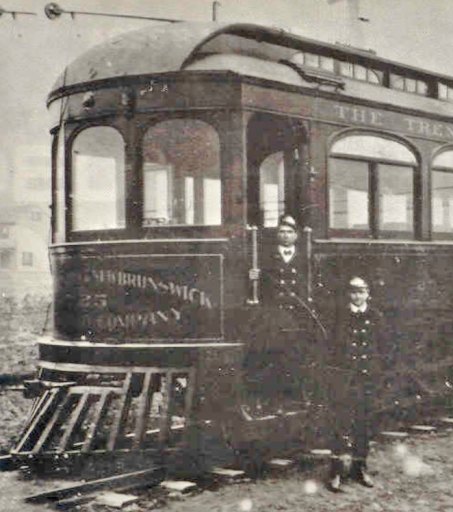
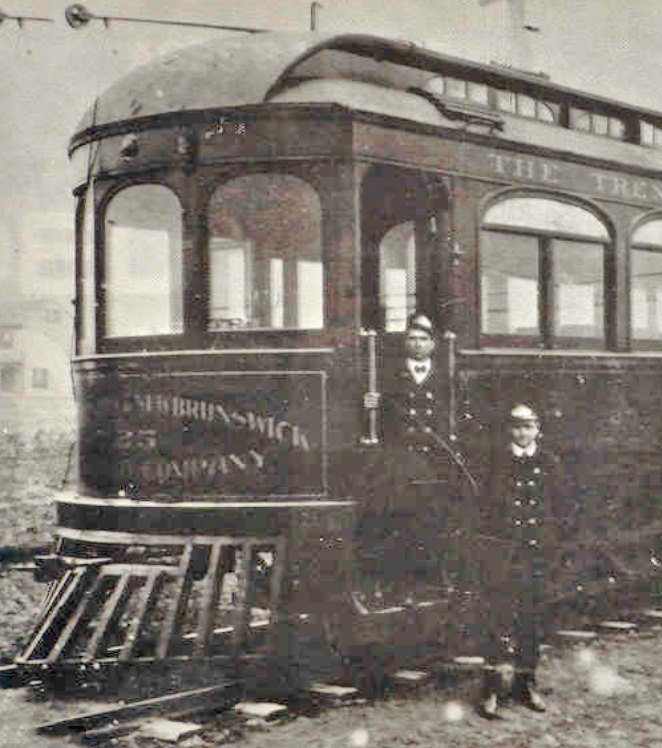
FAST LINE TO OPEN IN APRIL


P.S.C. Announces That Work on Link Between Bonhamtown and Elizabeth is Being Rushed—Cars to Pass Through New Brunswick

According to announcement made this morning to the Home News at the Newark office of the Public Service Corporation, the express trolley line from Newark to Trenton, passing through the heart of New Brunswick, will be opened the latter part of April. The work on the spur from Bonhamtown to Elizabethport is now being rushed.


This will be the connecting link in a trolley line from Newark to Trenton, and to Philadelphia by way of Camden.

An inspection of the line was made yesterday by President McCarter, of the Public Service Corporation, and other high officials of the company, and all were pleased with the outlook. For a distance of about eight miles from Elizabeth the rails are already laid, and the route, which is over private property, has been graded as far as Bonhamtown. When the work on this spur is finished, New Brunswick will have direct trolley communication with Elizabeth. There will also be direct trolley service between Elizabeth and Perth Amboy. It is planned to arrange the schedule in such a way that the fast line trolley will meet the New Brunswick–Perth Amboy cars at Bonhamtown.

The distance between Bonhamtown and Elizabethport is approximately 12 miles.

The fast line trolleys are to run over the Trenton–New Brunswick fast line as far as Milltown Junction. From there the cars pass over the P.S.C. tracks through New Brunswick over the Albany Street bridge, Highland Park, Lindenau, Piscatawaytown and Bonhamtown, and then to Elizabethport to Elizabeth and Newark.

Among the officials who made the inspection yesterday were Thomas N. McCarter, president of the Public Service Transportation, and John J. Burleigh, vice president.


Jan-18-1913-The-Daily-Home-News-Pg.-1