This Day in History: March 22nd, 1905

This Day in History: March 22nd, 1905

TIRE WORKS FIRE WON’T STOP WORK

The storehouse of the International at Milltown was destroyed, but the main works are saved—the damage well covered by insurance.

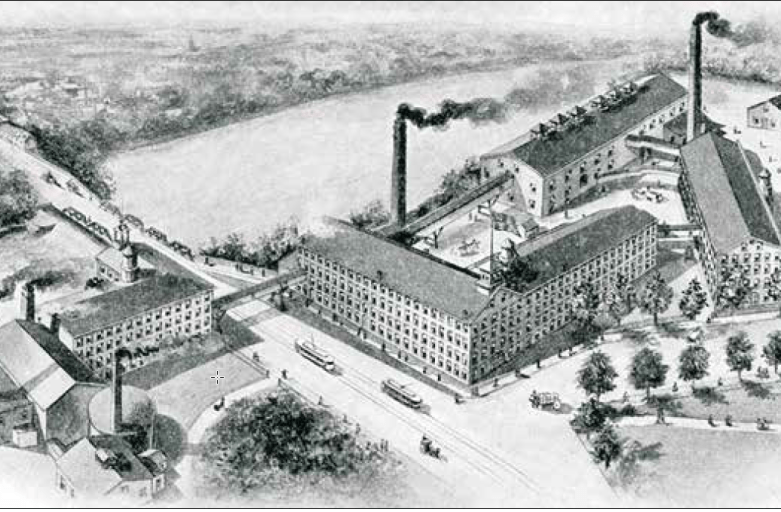
The six-story frame structure, approximately 70 by 100 feet, which was the plant of the original Meyer Rubber Co., situated at Milltown, burned last night. So great was the danger to surrounding property that help was sought from this city, with Raritan Engine Company and Liberty Hose Company responding.

Although the building destroyed was the real factory in the time of Christian Meyer, it had only been used as a storehouse for some years past by the International Automobile Vehicle and Tire Company. The brick structure opposite, where active manufacturing is carried out, was not harmed, even though it seemed at risk as the flames were moving across the covered bridge connecting the old building with the new brick structure.

The origin of the flames is a mystery, but it is thought to have started on the fifth floor around 6:30 PM when the employees were leaving, spreading rapidly due to the building’s age and the inflammable nature of the stock. The fourth floor was used as storage by the Jersey Rubber Specialty Company.

The assistance of the New Brunswick firemen was pivotal in controlling the fire. Sergeant Kelly, upon receiving the news and call for help, notified Chief Kidney, who dispatched the Raritan Engine Company and Liberty Hose Company. The latter made remarkable time, and the route taken was via Livingston avenue, recently cut through to the Cranbury Turnpike, and on to Milltown.

Raritan Engine Company’s engine, drawn by Walter Flavel’s horses, went out in record time. Second Assistant Chief Puerschner, in charge at Milltown, deployed a crew to the connecting bridge, beating back the flames despite suggestions to tear it down. Fire shutters on the main building helped contain the danger until the firemen arrived.

The plant’s overhead sprinkling system activated upon the fire’s start, with three streams from the building’s fire connections playing on the flames, although their impact was limited. Minor explosions occurred when the fire reached particularly flammable materials, necessitating continued water application until nearly midnight.

The electrical current for trolleys was shut off due to the fire’s proximity to the overhead bridge and feed wire. No. 4 engine was stationed on the other side, with hoses crossing the tracks. Water was pumped from a pond, and the stationary engine in the brick building, installed for firefighting, proved effective. The dense smoke from burning rubber products and appliances made the firefighters’ work more difficult.

The building, valued at $15,000 and built quickly after its predecessor’s destruction, was part of the original rubber factory of Christian Meyer. Insurance, managed by Weed and Kennedy in New York, covered the entire property at $500,000. The destroyed building was insured for $125,000 across several companies.

Howard DeHart, a trolley conductor, was the first to see the flames, raising the alarm as he crossed the old wooden bridge to North Milltown.


This Day in History: December 5th, 1908

This Day in History: December 5th, 1908

CRUSHED TO DEATH

Head Electrician William Duclos, of Michelin Tire Plant, Had Idea of Coming Death in Elevator Pit

Falling Weight Breaks Neck.

Crushed under an elevator weighing several hundred pounds, William Duclos, 29 years old, was almost instantly killed at the Michelin Tire works, Milltown, this morning. Death was caused by the tremendous weight on his head and back, which broke his neck.

The accident occurred shortly before 5 o’clock. Something wrong with the batteries controlling the elevator made it necessary for Duclos, who was head of the electrical department at the plant, to go into the elevator pit and discover the cause of the trouble. It is said that just before going down the shaft, Duclos had a premonition of his impending death, and turning to a fellow employee said, “I don’t know why, but something tells me I will never come out of that place alive.” Arousing his courage, however, the electrician descended and had hardly begun his investigation when the starting of the elevator caused one of the heavy weights to descend with a rapidity that made it impossible for its victim to move out of its path. He died about 15 minutes after the accident.

Dr. N. N. Forney, of Milltown, and Dr. F. M. Donohue were summoned, but upon their arrival, Duclos was beyond all earthly aid. Coroner John V. Hubbard, of this city, and Undertaker Moke were summoned and the body was removed to the dead man’s home on Vanderbilt Avenue.

Mr. Duclos had been employed at the Michelin plant for nearly two years, coming from Brooklyn in 1906 with his young bride. She alone survives him. Coroner Hubbard made a superficial examination of the circumstances surrounding the electrician’s death this morning but evidently did not satisfy himself that an inquest was unnecessary, for he went to the plant this afternoon for further investigation. There is an unconfirmed rumor that a careless employee was responsible for Duclos’ death in starting the elevator, not noticing the man in the pit.

Inquiry at the Michelin plant revealed a stubborn unwillingness on the part of those in authority to give out details regarding the tragedy. At first, an effort was made to deny that an employee had been killed.


This Day In History: November 16th, 1912

This Day In History: November 16th, 1912

MICHELIN CO. IS EXTENDING ITS PLANT

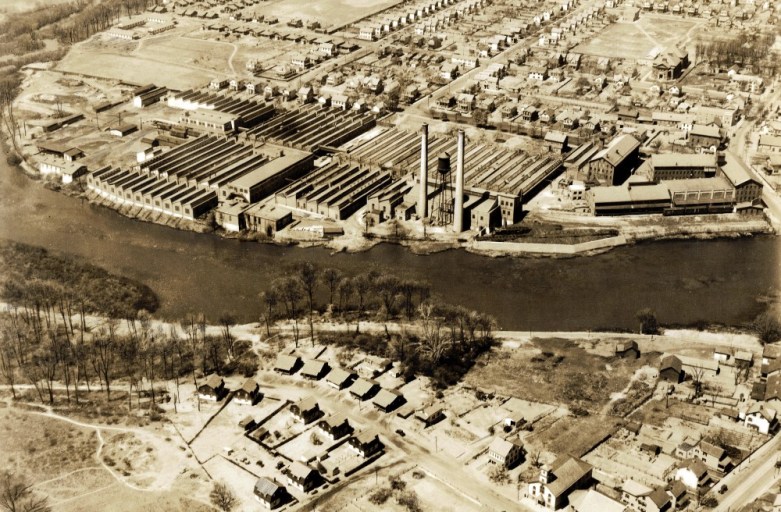
A large wing is being added to Building 14 at the plant of the Michelin Tire Company in Milltown. This addition comprises 46,540 square feet of floor space. The new wing is one story high with a second story of 18,770 square feet over one section. This building is constructed of reinforced concrete. The roof is designed in a “saw tooth” pattern, with light and ventilation coming from above.

Currently, there are now 20 people employed in the traveling department alone at Michelin.


Photograph published in Automobile Topics, June 22, 1912.

This Day in History: October 7th, 1909

This Day in History: October 7th, 1909

FAMOUS AUTO DRIVERS PASS THROUGH HERE

All Stop at the Michelin Tire Factory at Milltown, for the Michelins Are Their Favorite Tires—Busy at the Works.

Many New Brunswick folk have noticed this week the almost daily passing through the city of automobiles, answering closely to the description of the imaginary Spanish torpedo boats that were not off the coast of Maine during the early days of the Spanish-American War.

Certainly, these automobile crafts are “long, low, and rakish” in appearance and show, too, every evidence of being built for speed. But few realize that some of the world’s most famous automobile pilots were at the wheels, as the uncharted shoals of numberless breakers and many rocks in Albany street were skillfully avoided during the stormy passage to Milltown.

Chevrolet Holds Big Record

First in importance of these great visiting automobile drivers comes Louis Chevrolet, who was here on Tuesday with a lightweight Buick car that he will pilot in the Fairmont Park race in Philadelphia on Saturday.

This particular Buick is a new car, but on another of the same model, Chevrolet broke all world’s stock car records for sustained speed at Riverhead, Long Island, last Wednesday, when he averaged 70 miles an hour over the 113-mile circuit.

Chevrolet, a heavy-set, smiling Alsatian, came to this country seven or eight years ago as an employee of the De Dion Bouton Motorette Company, then building light De Dion cars in Brooklyn. When the De Dion company discontinued in America, Chevrolet went back to France and later returned with the Fiat automobile people. This was at the time that the original agency of Hollender & Tangemann was first opened in New York. Chevrolet has now become one of the world’s best-known drivers. He drives with his head and not only with his hands. He understands “the game,” is fearless, and wins frequently.

Another Hero of Auto Racing: “Bobby” Burman

“Bobby” Burman, hero of many hard-fought speed battles, was also in New Brunswick the other day. Burman set a new 100-mile world’s track record at New Orleans last February. At Lowell, Mass., last month, he won the Vesper Trophy contest, and at the new Indianapolis Motor Speedway in August, he captured the 250-mile race for the Indianapolis Trophy. During the season, he has won any number of minor contests and will unquestionably make a creditable showing in Philadelphia on Saturday. Burman, as well as Chevrolet, drives a Buick car.

Strang Wins Many Contests

Yesterday, Louis Strang, now pilot of a big red Isotta car, went through New Brunswick en route to Philadelphia via Milltown. Strang won the famous Briarcliff race in Westchester County, New York, last year, as well as the Lowell Stock Car contest, while he finished second in the fast Motor Parkway Sweepstakes. At Indianapolis in August of this year, Strang won the 100-mile race and established at the same time new world’s track records for 50 and 100 miles. Strang went through this entire series without a stop for repairs, supplies, or tires, which by the way were Michelins, made right here in our busy suburb of Milltown.

Michelin Tires on Road and Track

It is a matter of local pride that all the world’s important road and track contests are won on Michelin tires. Michelins are generally recognized as possessing superior qualities of speed and endurance. Chevrolet, Burman, Strang, Ralph de Palma, George Robertson, in fact, all the great racing car pilots, will not enter a speed contest on any other tires. Almost daily, these famous drivers are approached by rival tire manufacturers who offer them all sorts of inducements to use their equipment, but rather than risk life or limb by accepting any of the attractive propositions offered, these well-known speed kings stick to Michelins and willingly pay for them. Michelin tires are never given away under any circumstances.

Michelin Factory Busy

In an interview, Sales Manager Libby of the Michelin company states that speed and endurance contests of all kinds have done more to develop tires to their present state of perfection than all the slow, old-fashioned tours ever held. Mr. Libby asserts that automobile tires are obliged to sustain harder usage in a 300-mile road race than in a whole season of ordinary touring. He attributes the success of the Milltown factory largely to the fact that an ever-increasing number of automobile owners are satisfied to use the tires that stand up best in real tests of quality and durability, such as those developed in fast track races or long-distance road contests. Such tires are found to be invariably best for ordinary service on family cars driven at moderate speed.


This Day in History: September 30th, 1907

Milltown 1906

MICHELIN TIRE WORKS BOOMING MILLTOWN
Another Building Going Up – Etienne Neens Organizing Staff of Chemists.

The Michelin Tire Works of Milltown, which recently finished Building No. 8, is about to erect another building with double the capacity of the previous one. For now, the office is temporarily located in Building No. 2, but it will soon move to the building at the corner of Ford and Main streets. The repair department, under the supervision of S. B. Hughes, will install all the special machinery required.

The old offices are now occupied by the chemists and foremen of the different departments. Etienne Neens, twenty-four years of age and a graduate of the National School of Chemistry of France, is in charge of the experiments and is organizing the staff of chemists.

The Fiat car that won the twenty-four-hour race at Morris Park on Saturday was equipped with Michelin tires, as was the Renault car that won a race a couple of weeks ago. This speaks well for the durability of the Michelin tires.

Milltown is experiencing a significant increase in building operations, undoubtedly due to the advancements made by the aforementioned company. Five new houses have recently been completed, and seven more are set to commence soon.


This Day in History: September 30th, 1920

Milltown 1906


WILL CHARGE JAIL INMATE WITH MURDER


Joseph Serederski, Better Known as Joseph Bender, Dies as a Result of Attack with Shears Assault Occurred at Milltown Factory.

Joseph Bender of 100 Causeway, South River, who was stabbed last Thursday afternoon in an altercation with a fellow employee at the Michelin Tire Company plant in Milltown, died late last night at St. Peter’s Hospital in this city from his injuries. While the deceased was commonly known by the name of Bender, his true name was Joseph Serederski.

Walonsi Wisneski of Milltown, who was arrested last Saturday afternoon in South River on charges of attacking Bender and has been held in the county jail without bail since then, will be formally charged with murder this afternoon. This was announced this morning by Chief County Detective Richard Peltier.

Initially, Bender’s injuries were not deemed severe, but his condition deteriorated the day after the attack. The prosecutor’s office was promptly directed to apprehend his assailant. Bender exhibited signs of improvement earlier this week, leading many to believe he would recover. However, Wisneski was denied bail pending the outcome of Bender’s injuries. Bender’s condition declined swiftly last night after a sudden relapse, resulting in his death.

Wisneski has declined to comment on the incident. It is alleged that both men were working together at the Michelin plant last Thursday afternoon when a dispute arose. Wisneski is said to have grabbed a large pair of shears, typically used for cutting rubber, and thrown them at Bender. The shears penetrated Bender’s abdomen, damaging his intestines. Chief of Police Ebberwein arrested Wisneski in South River on Saturday afternoon based on a warrant issued in Milltown by their colleagues. Wisneski was subsequently handed over to the prosecutor’s detectives. His case is expected to be presented to the grand jury in their upcoming session.

The late Joseph Serederski was 27 years old. He is survived by his parents, Mr. and Mrs. Tony Serederski, along with a brother and sister. The funeral will take place from his recent residence on Causeway, South River, on Sunday afternoon at 2:15 o’clock, followed by a service at the South River Polish Church at 2:30 o’clock. Undertaker Maher is overseeing the funeral arrangements.