This Day in History: March 16th, 1920

Fred DeVoe

ANNEXATION BILL PASSES AS AMENDED
Milltown Measure Has the Boundary Lines Narrowed and Referendum Included—Mayor Kuhlthau Jumps Into Fight—Statement by DeVoe

Mayor Christian Kuhlthau, progressive Mayor of Milltown, took off his coat yesterday and entered the fight for annexing a small portion of North Brunswick Township. At nine o’clock in the morning he instructed Borough Engineer G. P. Stelle to attend the hearing on Bill 237 and ask Assemblyman Fred W. DeVoe to accept a substitute along the lines approved by North Brunswick at the hearing on last Thursday evening, and also insisting that a referendum be placed on the bill for the voters of Milltown.

Ever since the opposition sprung up, which happened while the Mayor was sojourning in the South, the progressiveness which has characterized the preceding administration has been menaced, also the spirit with which the Chamber of Commerce started their organization has been threatened.

Upon arriving home from the South a few days ago, the Mayor was confronted with the old time opposition, which he never expected. The Mayor originated the move for annexation in the Chamber of Commerce about eight months ago, never dreaming but that all parties would favor it. It did not take long for him to size up the situation and he moved quickly. He challenges the opposition to step forward with any fundamental reasonable arguments against it. Seeing the possible defeat of his progressive policy, the Mayor has stepped half way to meet North Brunswick.

North Brunswick Compromise.

The Mayor took into serious consideration the compromise offered by North Brunswick Township and considered that her desire to still control Elkins Lane and the Oak Hill School House was very fair, and as a result he favored only a bill taking in the properties on the south side of Elkins Lane, the Elkins and Gebhardt properties, and the small portion of Vanderbilt Manor. It was with instructions to accept this compromise that the Borough Engineer attended the hearing yesterday. It was said today that sentiment aroused in North Brunswick Township against Bill 237 in its original form made it difficult for the committee from that township to even accept this compromise yesterday, but they chose the committee substitute in preference to the original bill. The lines as finally embodied in the bill were those suggested by North Brunswick at the hearing on last Thursday night in the Council chamber.

Owing to opposition created in Milltown on Bill 237, the Mayor also favored a vote of the people and a referendum was embodied in the bill.

For and Against.

It is expected that the following will line up for the bill: The Mayor, H. R. B. Meyers, president of Chamber of Commerce; Harold Schlosser, president of Council; William Hannah, candidate for Freeholder from Milltown, who attended the hearing yesterday and is in favor of the lines laid down by North Brunswick; James Herbert and Chas. V. L. Booraem, Councilmen; ex-Councilmen Wm. R. Evans and Joseph M. Crabiel, Postmaster John V. L. Booraem, Assemblyman DeVoe and others who have served their borough in the past.

The opposition up to the present is being led by Charles E. Denhart, Spencer Perry, Oscar Lindstrom, Casper Graulich and Charles Wolff.

Middlesex Assemblymen Solid.

Assemblyman DeVoe was ably assisted by Assemblymen Albert W. Appleby and C. Raymond Lyons in the Legislature and the vote was overwhelmingly in favor of the amended bill on third reading, only four or five votes being registered in opposition.

Attorney Irving Hoagland, counsel for North Brunswick appeared at the hearing and objected in behalf of the residents of the township to the proposed new boundary line as provided in the bill.

When the bill came up for a vote, the Mercer County delegation objected to its passage on the ground that the voters in the section to be annexed were not permitted to vote on the annexation, under the provisions of the bill. Mr. DeVoe explained that a petition had been received by him signed by every resident in the area affected requesting that the bill be adopted.

DeVoe Issues Statement.

For the purpose of explaining why he fathered the bill, Assemblyman DeVoe issued the following statement today:

“Two changes were made last night in the Milltown–North Brunswick Annexation Bill, as introduced by me, in order to satisfy the opposition from the Township of North Brunswick, and also to allow those who live in Milltown and who have evidenced a desire to vote on the question, an opportunity to be registered either for or against annexation.

The first change was to so re-adjust the boundary lines that the school house known as Oak Hill School House would remain in the Township of North Brunswick, and not be annexed to the Borough of Milltown, as provided for in the original bill. If the bill becomes a law, as amended, the boundaries of Milltown on the northerly side of Milltown will be as follows: Westerly to the brook called Sucker Brook; northerly on the westerly side of the Berdine’s Corner Road to the gully at the Oak Hill School House; northerly, on the easterly side of the Berdine’s Corner Road, to Elkins Lane, and extending easterly along Elkins Lane to the right of way of the Raritan River Railroad.

The second change, as stated, was the addition of a referendum allowing the voters of Milltown to vote on the question as to whether or not they desire annexation, at the presidential primaries to be held on April 27th. The voters who were registered at the November election in 1919 are eligible to vote at the presidential primaries on this question. Those who were not eligible to vote at the November election in 1919 and are now legal voters of the Borough of Milltown will have an opportunity to be added to the list at a special registry, to be held one week prior to the presidential primaries.

The Chamber of Commerce of Milltown, which has, and will always have, the best interests of Milltown at heart, has endorsed the annexation proposition. A majority of the Common Council of Milltown favors the extension of the borough lines to the boundaries hereinbefore described.”

This Day in History: August 1, 1923

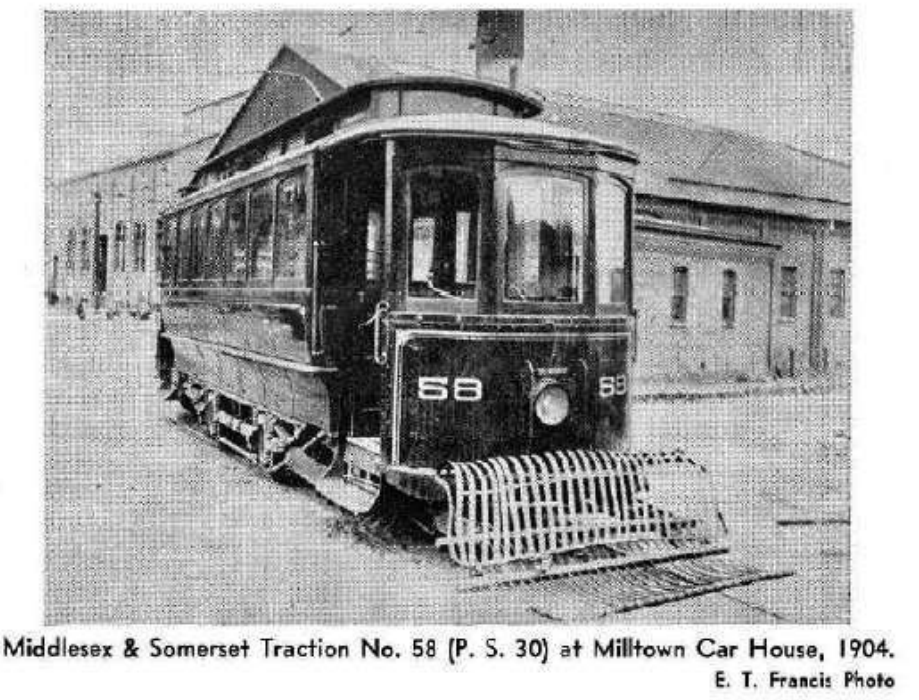
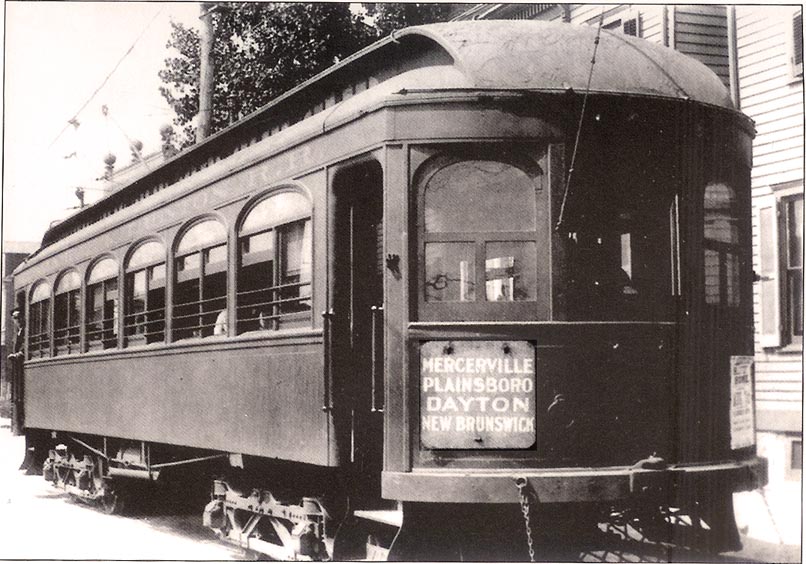
No, 58 - P.S. 30 - at Milltown Car House 1904 - E. T. Francis -

FORTY-SIX BUSES TAKING CARE OF LOCAL TRAFFIC


Commissioner Connolly Says Service Satisfactory in the Main.


EMPTY BUS BURNS UP NEAR ARSENAL

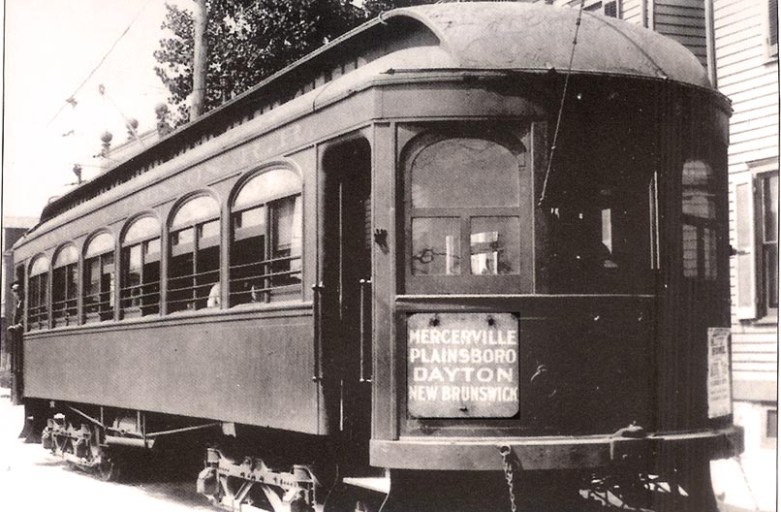
The Public Service trolley strike in New Brunswick and throughout New Jersey on the Public Service lines is in full swing, starting shortly after midnight last night. Today the public had to rely entirely upon the jitneys and private conveyances for transportation. New Brunswick was not unprepared for the situation and at 6 o’clock this morning forty-six buses were set in motion to transport the army of workers to their places of employment.

Only two lines of travel in this section were held up this morning and these were the routes to Bound Brook and Milltown, the former because of the condition of the roads and refusal of the jitneurs to attempt to operate buses. The Milltown line, which was held up temporarily because of lack of cooperation from the officials of Perth Amboy. All other lines started off as per schedule and at noon, they were operating smoothly without mishap.

Commissioner Frank A. Connolly of the Department of Revenue and Finance, who has jurisdiction over the buses, and Commissioner William C. Jaques of the Department of Public Safety were out at 6 o’clock to direct the operation of the buses and the regulation of traffic. Advanced plans had been so perfected that there was practically no confusion and thousands of men and women were carried to their places of employment.

The Milltown situation will be straightened out before the day is over as Commissioner Connolly has arranged for the operation of a regular string of buses to that borough. Because of the failure of cooperation by officials of Perth Amboy, two big buses which had been chartered to transport the employees of the Michelin factory failed to put in appearance and the employees were delayed for fully half an hour in reaching their places of employment. The Codwise Avenue and Burnet Street buses were taken off their routes and sent to Milltown, making several trips and carrying several hundred men and women.

Detour Employed
Sufficient buses will be on hand tomorrow to transport the Milltown workers. The paving at Berdine’s Corner prevents the use of a portion of Main Street in Milltown and compels a detour through Ryder’s Lane. There is a bridge on this lane which will have to pass inspection before any of the heavier buses are sent over the detour.

The only mishap to occur this morning was shortly after 6 o’clock when a bus of the New Brunswick Auto Service Company, on its way to the Raritan Arsenal, caught fire and was completely destroyed. The driver of the car escaped injury.

The bus was empty at the time. It had been arranged in advance to have four buses to operate between New Brunswick and the Raritan Arsenal, two to leave New Brunswick at 6 and 6:15 and two from the Arsenal at the same time. The one bus which was destroyed was the first to leave the city.

There was practically no confusion in New Brunswick and after 8 o’clock many of the buses were traveling only partially filled. There was a big crush of people at noon but the buses apparently were taking care of the people in fine shape.

In addition to the Milltown and Raritan Arsenal routes, the other jitney routes operating this morning were those on Easton Avenue, Throop Avenue and Codwise Avenue. The Codwise Avenue route was abandoned during the morning when David Skidmore, whose extra bus had been assigned to this route, refused to operate.

Fair Schedule
The buses at noon were maintaining a fairly good schedule and practically no complaints were made as to the service, although about fifteen more cars could be used to good advantage.

The South Amboy and Perth Amboy lines had extra buses and throughout the morning a fifteen-minute headway was maintained, with this service being improved at noon. In addition to the regular South Amboy service, buses leaving New Brunswick at fifteen and forty-five minutes after the hour will, instead of continuing through Sayreville over the Parlin Road, switch off at Miller’s Corner and travel through Lower Sayreville along the trolley tracks.

The Berdine’s Corner residents were not forgotten this morning for two buses maintained a good schedule between that point and New Brunswick. The travel was not heavy, however, and at noon, one of the machines was placed on the Codwise Avenue line.

Four buses operated between Highland Park and New Brunswick on a five-minute headway. The buses operating on the Raritan Arsenal line were leaving the city this morning every fifteen minutes and efforts would be made to maintain this schedule.

The Throop Avenue and Remsen Avenue lines were working on a seven and one-half minute headway while the buses for Perth Amboy were leaving ten, twenty-five, forty and fifty-five minutes after the hour. Eight buses are operating on this line and during the rush hour extra cars will be placed on the line.

While Commissioner Connolly expressed himself pleased with the service provided by the jitneys this morning, he declared that tomorrow it will be improved. The schedules will be re-arranged to meet emergencies. Every bus this morning carried a large cardboard sign issued by the city, designating its route.

No Increases Here
Commissioner Connolly declared emphatically this morning that there would be no increase in the jitney fares within the limits of the city. Jitney riders are cautioned to pay no more than five cents for transportation in New Brunswick.

“I have no control over the jitneys once they leave the city limits but no increase will be permitted in fares here,” said Mr. Connolly. “It has come to my attention that some jitneurs charged more than the fare permitted by ordinance early this morning but they have been remonstrated with and repetition will result in revoking their license.”

Jitneys operating to Milltown are charging ten cents. The jitneys to the Raritan Arsenal are also charging ten cents, which is a boost of two cents over the trolley rates.

While jitneurs are charging two cents more per fare than the Public Service to Milltown and Raritan Arsenal, jitneys operating in New Brunswick are charging three cents less than the Public Service. For instance, a passenger on an Easton Avenue bus can ride from Buccleuch Park to the Squibb plant on George’s Road for five cents, while the Public Service charged eight cents for the trip.


Big Fare Increase Follows Strike Here
The suspension of trolley service hereabouts has resulted in some startling increases in fare. One of the most startling is that imposed on passengers to and from Bound Brook. Passengers in auto buses from Bound Brook this morning paid fifty cents for a one-way trip. The trolley fare was sixteen cents or fifteen cents if tokens were used. The bus fare to Milltown is ten cents, an increase of twenty-five percent.
The Bound Brook service is being provided by two Coney Island buses which operate on a twenty-minute schedule.


This Day in History: May 9th, 1905

This Day in History: May 9th, 1905

MILLTOWN, May 9. — A score of 10 to 5 was the result of the game, May 7th, in favor of the Milltown team over the Sayreville Athletic Club. H. Fine pitched, and R. Hammond caught for Milltown. Of course there was some “Fine” pitching, and eighteen men were struck out. The undefeated Milltown boys would like to hear from Jamesburg.

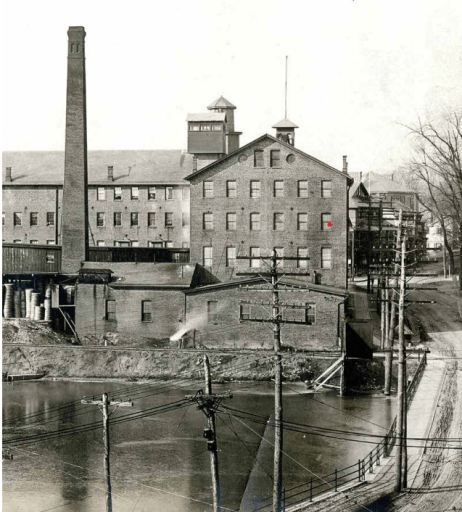
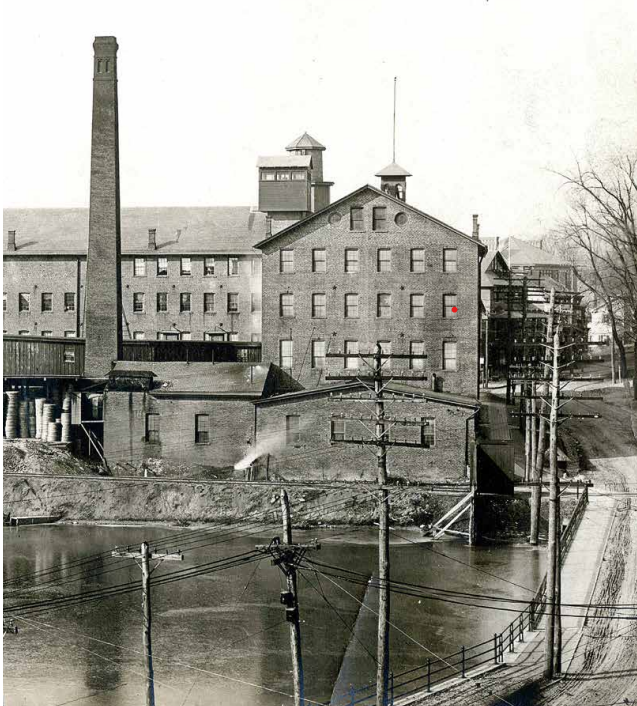
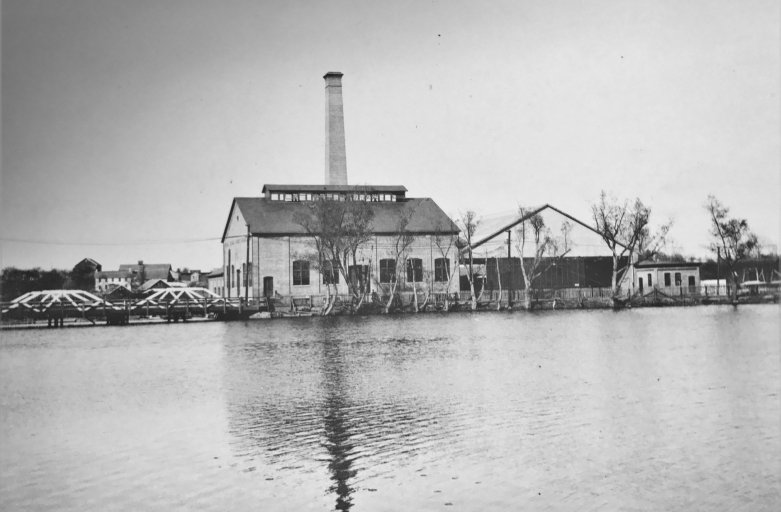
The demand for electrical “juice” in this division of the Public Service Corporation is nearly to the limit of generation in this power house. The building is so situated that it does not admit of any larger growth, except upward, and they get too much power from that direction during thunderstorms. The head electrician regrets putting in that last engine, as about 300 horse power cannot be used for lack of room. A different engine would have produced more power for the space given.


This Day in History: May 8th, 1909

Michelin victory

MARVELOUS ARE THE MICHELIN TIRES
One of Our Wonderful Industries of French Extraction Has Made a Record That Helps to Spread the Fame of New Brunswick and Neighboring Milltown, Where the Factory is Located.

Every famous car that flashes across town, a suburb of New Brunswick. Almost every American tourist who takes his automobile through the lands of the Aztecs; or through the vineyards of Italy; or across the Pyrenees; or over the Alps of Switzerland; or through the waving fields of Brittany; or into Russia, the Caucasus, India or other parts of the world carries the story of New Brunswick with him because he has provided himself with Michelin tires in order to get the utmost pleasure out of his journey.

It is needless to say that the Michelin factory at Milltown is one of New Brunswick’s proudest boasts. The entire establishment covers eighty acres of land. There are fifteen separate buildings covering nine acres of floor space. Six of the buildings have been enlarged within the last year. Two shifts of employees have been working every day since December 1907. The Michelin company has ten branches on the principal thoroughfares in ten of our largest cities as follows: New York, Boston, Philadelphia, Buffalo, Cleveland, Detroit, Chicago, Denver, San Francisco and Seattle.

The Michelin factory near New Brunswick is the fourth of the great plants built by the company since the business was started in Clermont-Ferrand, France, away back in 1832. The other Michelin factories, in addition to the French establishment and that in New Jersey, are in London, England, and Turin, Italy. It is the proud boast of the company that Michelin tires are for sale in every country in the world where cars are used.

The closest possible manufacturing relations exist between all the Michelin factories. All the tire-making machinery used at Milltown, and all the materials that go into the construction of Michelin tires are imported. The materials, processes of manufacture, and the many exclusive or secret formulae developed after eighty years’ experience in the handling of rubber, are identical in all the Michelin establishments even to the minutest details.

The officers and department heads of the American factory are: President, Edouard Michelin, whose headquarters are in France; vice president, John C. Matlack; treasurer, E. Fontaine; assistant treasurer, R. E. Glass; sales manager, F. W. Libby. The factory is in charge of J. Hauvette Michelin. The purchasing agent is M. L. Cramer, and the advertising manager, R. B. Bramwell.

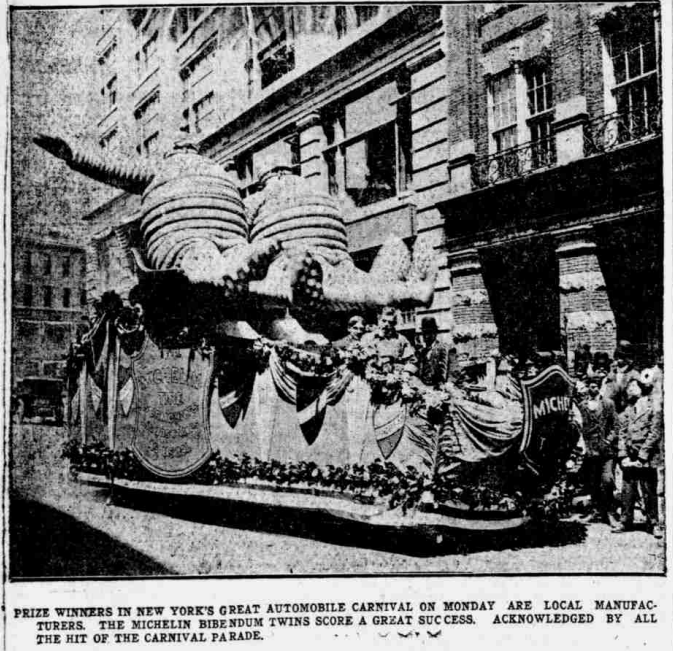
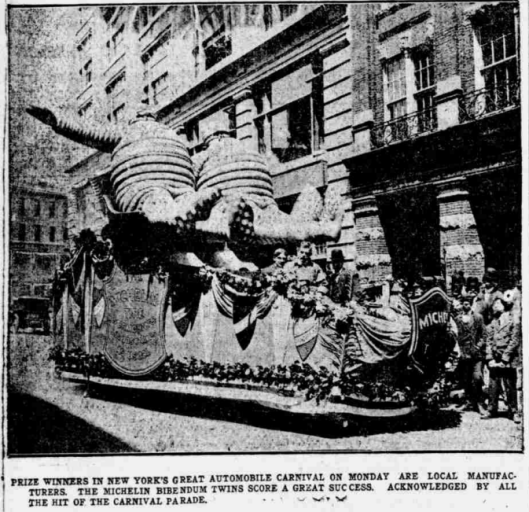
On Monday of this week the New York Automobile Trade Association held its second annual Carnival parade in which over four hundred gaily and grotesquely decorated cars participated. The Michelin Tire Company, of Milltown, N.J., which is a suburb of New Brunswick, won the first prize in the most important division, and thus once more attracted the attention of the automobile and sporting world to a home industry.

The Michelin float carried two rollicking rubber comedians from South France, known throughout the world as the Bibendum Twins, the same pair that were the heroes of the 1908 Carnival at Nice.

These rubber giants from Clermont-Ferrand were seated comfortably, surrounded by flags and bunting and many shields, each carrying the name of some proud Michelin victory. This unique exhibit added greatly to the general carnival spirit and won not only the first prize but the additional approval of all New York’s great newspapers, which is unique, as it is seldom that all the papers agree on anything.

The Bibendums were apparently built up from tires. Each figure carried a giant cigar. By most ingenious pneumatic operation their faces at one time reflected the utmost happiness and tranquility, and again they would assume every appearance of melancholia and distress.

The Bibendums, absolutely motionless at times, would rise suddenly to full height, throwing up their arms, and with bodies swaying and heads bent back, their faces would brighten up as if they knew in advance that the coveted first prize was to be their award at the end of the parade. The street urchins were quick to “catch on,” and they went rolling and laughing along Broadway in imitation of the antics of the Twins, much to the amusement of the older and more dignified, who enjoyed the day, however, no less than the children.

There is an elaborate and interesting story connected with the history of the Bibendum Twins. As the tale is told in France, these mighty curios were reared in Africa, the unusual offspring of a sturdy ostrich. Without injury to themselves they soon learned to devour or drink anything and everything, hence the name Bibendum. Broken glass, old horseshoes, nails, metals of all kinds and automobile trophies wherever offered are their regular diet, but, as the story goes, nothing satisfies their omnivorous appetites. Serious, grotesque, strong, weak, imperious, yielding, severe, comic, all in turn, the prize-winning Bibendum Twins were without doubt the most curious and most talked of travelers in all New York.


This Day in History: April 9th, 1913

This Day in History: April 9th, 1913

FREIGHT LINE TO PASS THROUGH RIVA AVENUE?


MILLTOWN, April 9. — Surveyors were at work in North Milltown yesterday preparing a new route for the proposed freight line which originally was intended to cross South Millstone. It has been reported that trouble is being experienced in securing the desired land in other sections of the town, therefore, the line will branch off in a northerly direction before coming into Milltown, which according to yesterday’s survey would bring it near Riva Avenue, passing through the residential section.

One of the remodeled Trenton Fast Line cars arrived at the barns yesterday and it is expected that several others will follow this week. The remodeled cars are of heavier construction throughout and will be able to run at a much greater speed than the present ones.

William Fisher, the truck farmer adjoining the Borough, had a narrow escape from a serious accident yesterday when his horse ran away. The runaway occurred on Suydam Street, New Brunswick. The horse fell down while on a dead run and was badly bruised and the vehicle was somewhat damaged.

The Epworth League of the M. E. Church are preparing for a great boom on the 16th inst. A rally day will be held in which several well-known ministers from near-by towns will take place, and on the 23rd inst., a “mystery supper” will be held.


This Day in History April 7th, 1911

This Day in History April 7th, 1911

WAS SHOCKED AT MICHELIN WORKS
Aliks Brooks Sues for $5,000, Claiming He Was Not Warned of Presence of Electric Switch—Unable to Perform Manual Labor.


Claiming that he was injured so seriously while at work in the Michelin tire factory at Milltown, last August, that he has since been unable to perform manual labor, and alleging that his injuries were due to the failure of his employers to notify him of the dangerous character of work given him to do, Aliks Brooks began suit yesterday, before Judge Lloyd and a jury, for $5,000 damages.

According to the story told by the plaintiff on the stand, he was instructed by James Gibson, his foreman, to clean the overhead steam pipes in one of the mills, and while crawling along on these pipes he came in contact with an electrical switch, from which he received such a shock that he was precipitated to the floor, 22 feet below.

The witness exhibited a big bruise on the left side of his forehead where he had struck the concrete flooring, and bared his back for the jury to see three large contusions on his spine, which remain as a result of the fall.

Clifford I. Voorhees and Alan H. Strong appeared as counsel for the plaintiff, who is a Russian, and whose testimony was given through interpreter Frankel. Frederick S. Kellogg, of Bedle & Kellogg, a Newark law firm, represents the defendant company.

The jury drawn to try the case consisted of Jacob H. Hoagland, Geo. St. Andrassy, Frank Buote, Joseph B. Quick, Frank Van Nuis, Joseph Deagan, Louis Hildebrandt, Harvey Dey, William Stokes, George Everitt, Charles Holstein and Walter Compton.

Questioned by Mr. Strong, the plaintiff asserted that no one had warned him of the presence of the switch that caused the accident. He said that he had been employed at the Michelin Works for two years and a half, his principal duties being to lift the heavy moulds into which rubber is poured in the making of tires. He was also called upon to act as a general “helper” in any necessity that might arise.

The witness said that he was unconscious for several hours following the accident, and had spent a week in one of the local hospitals. He was confined to his home for a month after leaving the hospital. Upon returning to the Michelin Works, the witness said that he was called upon to wheel coal, which duty he was unable to perform because of his weakened condition.

Later, he had obtained employment in the Old Bridge Glass Works, but found this too arduous also, and he has been out of employment for several months. Mr. Brooks swore that he suffers constant pain, and has been informed by Dr. Selover, of South River, and Dr. Smith, of this city, that he has been permanently disabled. At the time of his injury he was getting 18 cents per hour, his weekly pay varying from $9 to $14, according to the number of hours he had worked.

Under cross-examination, the witness denied that he, with four other employees had waited upon Superintendent Henry Young at the Tire Works, and announced that he wouldn’t wheel coal for a living. He was questioned concerning remarks he was alleged to have made to a fellow employee who accompanied him to New Brunswick in an auto immediately following the accident, but declared he couldn’t remember speaking to anyone at the time mentioned. At this point adjournment was taken for the day.

Can’t Straighten Fingers.
The cross-examination of the plaintiff was resumed this morning, when Attorney Kellogg questioned him at length concerning his sensations when he received the alleged shock.

“I don’t remember how it felt, only I know I was knocked down as soon as I touched the switch.” The witness swore that he is still unable to straighten two fingers on the left hand that came in contact with the electric current, and exhibited the marks on his hand to the jury.

A motion by Mr. Kellogg that the testimony of the plaintiff concerning a “shock” be stricken out on the ground that it was simply hearsay evidence, was refused by Judge Lloyd.

Counsel for the defense failed in an endeavor to secure from the witness an admission that he knew of his own knowledge the dangerous nature of the electric switches near which he was called to work.

Nickola Silka, a fellow workman, testified that he heard the order given Brooks to clean the pipes, and had heard nothing said by the foreman concerning the electric switch.

The witness said that he had accompanied the injured man to the hospital. He had noticed that Brooks was unconscious and bleeding from the wounds in his head and back. Similar testimony was given by Walter Schitz and Joseph Wanslopsky, fellow employees who had witnessed the accident. The cross-examination of these witnesses developed nothing of special moment.

Plaintiff’s Wife Testifies.
Mrs. Alice Brooks, wife of the plaintiff, took the stand in her husband’s behalf. The witness bore in her arms a few months’ old infant and, like the other witnesses, testified through an interpreter. Mrs. Brooks told of the care she had given her husband. No cross-examination.

Dr. J. Warren was called to tell of two occasions on which he had examined the plaintiff since his injury, and declared that he found Mr. Brooks suffering severe pain. In his opinion the injuries were likely to be of a lasting character, as the nerves affecting the muscles of the back were badly injured.