This Day in History: January 28th, 1922

This Day in History: January 28th, 1922

WOMAN APPEARS AS COMPLAINANT AGAINST BAGOYNE

A few minutes after he had gotten off a train here yesterday afternoon, Eugene J. Bagoyne was arrested on George street by Deputy Sheriff Frank P. Kirby on a warrant issued some time ago by Justice of the Peace Charles W. Sedam and which charges fraud.

During October and November 1920, Bagoyne, who is pastor of spiritualist churches in Newark and Elizabeth, is alleged to have obtained from Victoria Okertz the sum of $150 under the pretense that he could by spiritual power get her in communication with her husband, said to be dead.

Mrs. Okertz, who is a resident of Perth Amboy, is complainant in the case. Her husband disappeared some time previous to the alleged experiment with Bagoyne, and it is not known whether he is dead or alive. The complainant alleges that she had no communication with her husband and that the money has not been returned to her.

Bagoyne was arraigned before Justice Sedam and was released under bail. A somewhat similar complaint was made against Bagoyne some time ago while he kept a chapel on Ryder’s Lane near Milltown, but no indictment was found.


This Day in History: January 19th, 1930

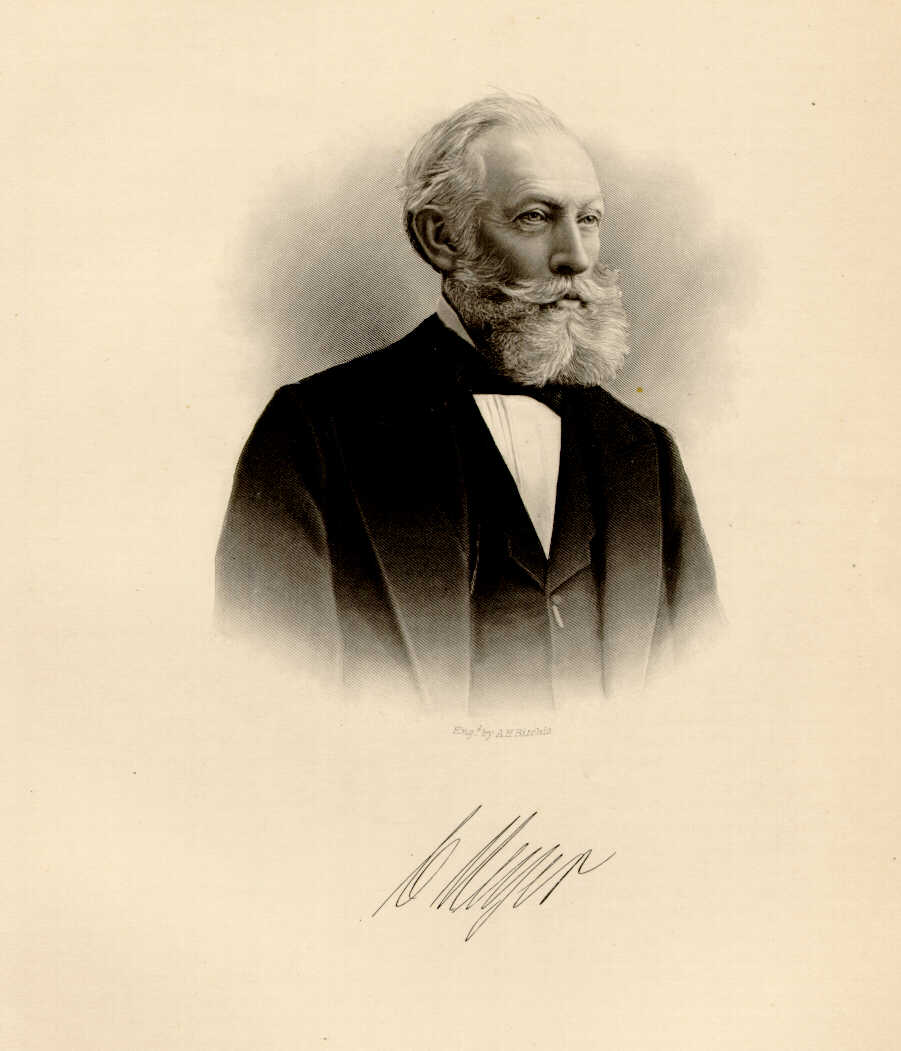
Christopher Meyer 1882

Christopher Meyer 1882

Christopher Meyer, New Brunswick’s Pioneer Rubber Manufacturer


Born in Germany, He Came to This Country When Fifteen and Soon Climbed Ladder of Success: His Industries Here And in Milltown Were Forerunners of Giant Tire Plants of Today

By MARY R. THOMAS

New Brunswick and New Jersey always have given the finest opportunities for commercial development to men who have had the ability to use them. Therefore, New Brunswick has won a name among her citizens and for her foresight, ability, and industry who have made, each in his or her own individual case, some contribution as well as to world advancement to prosperity and happiness.

The contributions they have made as manufacturers and in careers are enough to inspire the coming generations to meet the test of encouraging young men and women to scale heights in the business world by the cultivation and reliability of their talents and ability and to amass great wealth by their own exertions and good sense. Now it doesn’t seem to really matter how far down in the social scale a young man starts, if he can climb to the top in the industrial world, and has the right qualifications and body to adjust human emotions. That is why certain citizens have done such an honor to the name of the state’s best efforts and the records of New Jersey’s advancement.

One of the most prominent men in New Jersey’s business world was a young man named Christopher Meyer of New Brunswick, who did a great deal to organize and promote the rubber industry in those years before automobiles were in the world. Probably we never realize today, as all of us had so many conveniences at hand, that it was not the time when all of us would want and need tires. And it may fall short of understanding what need for a vision it took to a man to have the foresight years ahead of his time.

Christopher Meyer was not a native Jersey man. He was of foreign descent from Germany to the United States and did his part to better and win fame for the rubber business and was noted as prominently as anyone else, even during the Civil War days and long afterward.

Born in Germany
Born in Germany, Christopher Meyer came to this country when he was fifteen years old, born in Baden, Germany, in 1836. He was only a boy of fifteen years when he came to America, and like all foreigners of his day, saw there was a place for him in this country, wherever he took a fancy to work, where his knowledge of machinery enabled him to find work in a machine shop where he worked for one year. Then a man named Hugh Maxwell engaged him to superintend the building and setting up of a mill at Ramapo.

Came to New Brunswick to Work
Meyer’s knowledge of machinery was his greatest asset, for in 1852, at Newark Rubber Company, he was engaged by a man named Horace H. Day in perfecting and making machinery for the manufacture of rubber boots and shoes, laying the foundation for his own successful life.

Horace H. Day was New Brunswick’s first rubber manufacturer, in his little shop down on Dennis street. Mr. Day was a young German, was precisely the man he was, so he engaged him for at least two weeks, with the promise of a much larger salary than he dreamed of. It was little enough for the work he was to do, but Meyer soon realized his employer could not afford to pay him more money, and that was likely to be the pay then the best of his knowledge and valuable talents, “for nothing but nothing will come.”

Goes in Business for Himself
He resolved to go in business for himself, though he had no money to start out with. In the way, he often worked half days for his employer and nights for himself, and he put all he made in patterns and plans. Soon he had enough money of his own ready and started for himself, but, though his sufficient understanding and experience, he lacked money to secure always the necessary means for undertaking of a business. He was not discouraged nor stopped him and he borrowed $300 from a banker, and this is the first money he put up and began at Landing Bridge on the Raritan River. Here he succeeded well, though it was only small a thing, he always managed to meet his work and his expenses. He built himself his own and worked his family, and the few men he employed made up the same. At last, he realized he could not alone supply the demand for work, and he leased it to Mr. Peter Onderdonk for a year, where he remained at the factory.

Evidently, he was a good businessman and carried on his factory in such a way as to attract other men for, at the end of that time, he sold out the little factory, if it could be so called, to Onderdonk, which afterward became the nucleus of the New Brunswick Rubber Company. Apparently, Mr. Bishop had kept his eye on the young man for when he went to Onderdonk, Mr. Bishop, who was in business in Milltown with a firm named Ackerman & Bishop, put Christopher Meyer in charge of their plant in Milltown.

In 1854, he conducted a business under the firm name of Ackerman & Bishop for five years but then conducted the Meyer Rubber Company after 1860.

New Brunswick Value
Mr. Meyer, however, recognized New Brunswick’s value as an operating point in the rubber industry, and in 1872 he organized a new company, the New Jersey Rubber Shoe Company, and put up adequate new buildings for manufacturing, down on Little Burnet Street. Of course, he was made president of the company, with a controlling share of stock, and it once went to work to make rubber shoes and other articles, rubber cement, and other supplies.

Later the United States Rubber Company was organized in New York City by the name of the company and companies that were organized and sponsored by Christopher Meyer and its officers: Francis B. Davis, president; W. H. Blackwell, treasurer; and Eric Brockman, secretary. Here are the following out the methods of the founder or others that are an improvement upon them, and more suitable for today’s needs.

In 1892, the name of the old New Jersey Rubber Shoe Company was changed to its present name, the United States Rubber Company, with which James Deshler has been connected since 1874. Mr. Deshler is too well and favorably known to need more of him here. He is one of the best citizens of New Brunswick.

Christopher Meyer died in 1888, but does he still live? This brief sketch is submitted for readers promoting rubber men of later years, his efficient, energetic, and notable business man of the present, as well as of the former, New Brunswick. Mr. Deshler was born in this city on May 9, 1850. In his youth, he became interested in the religion of Pennsylvania, where he spent ten years in his youth, returning to New Brunswick in 1870 on account of disastrous floods there. At once, he became associated with the New Jersey Rubber Company, as it was then called, and has remained with the company ever since, throughout his life and career.

Meyer Died in 1888
Christopher Meyer spent his last years at his home on Fifth Avenue, New York, where he died on July 23, 1888, and was buried in Elmwood Cemetery, where his remains lie today. His son, J. Christopher Meyer, lives in New York City, but New Brunswick may still claim an interest in him, as his two granddaughters, Mrs. J. K. Rice and Mrs. S. N. Rice, live in Highland Park on Adelaide Avenue.

Business Paid Millions Annually
Mr. Meyer became interested in the rubber business when it was in the beginning of America’s largest industries. He developed here a business whose earnings amounted to the millions every year from a modest investment of only a few thousand dollars. Rubber accounted in New Brunswick through the business of Christopher Meyer’s time had far-reaching ways upon the industry throughout the country and had no small effect in making it become what it is today, one of America’s largest, most prosperous commercial enterprises.

In addition to his share in developing the rubber industry in this area and the United States, Mr. Meyer was interested in many other things here in New Brunswick, the gas light company, banking companies, railroad companies, and other enterprises. Indeed, he was a prominent man who contributed his energy and ambition to whatever he went into, he inspired men everywhere.

The businesses Mr. Meyer organized, in association with others, were among the oldest and strongest names in old New Brunswick, the Novelty Rubber Company for the manufacture of hard rubber goods, such as buttons, smokers’ supplies, crochet and knitting needles, match boxes, and tubing rubbed in the turn but made rubber canes in great variety and many other kinds of articles. Their goods were in demand and were shipped to all parts of this country and to various parts of the world, to South Africa, South America, and Australia.

Married New Jersey Girl
Christopher Meyer gave the strongest proof of his love for New Jersey by marrying a New Jersey girl. His wife’s name was Margaret Evans, and she lived in Belleville, New Jersey. He married her in 1864, and they lived in New Jersey, leaving seven children – five daughters and two sons.

An old book in Rutgers Library has this to say of Christopher Meyer, and who would not be proud to have such words said or written of him:

“Mr. Meyer may be safely classed among the self-made business men of the century and an example of what properly directed ambition and a will to succeed under adverse circumstances may achieve.”

This brief sketch of one of the most important industries and its organizer in the New Brunswick of nearly a century ago tells but very little of what may be done. The old-time business men of those days and the business men of the same general subject may today look over a century ago, New Brunswick’s part in this great commercial enterprise, the rubber industry, is very interesting.


This Day in History: January 12th, 1917

This Day in History: January 12th, 1917

MILLTOWN CUTS EXPENSES ON ITS ELECTRIC WORK

Assistant Superintendent to Replace Work of Borough Clerk and Official Tapper — Other Items at Council Meeting.


MILLTOWN, Jan. 12 — One of the most radical, though economical and efficient changes in the administration of borough affairs took place at a regular meeting of the Borough Council last night when Councilman William R. Evans offered resolutions in behalf of the finance committee, abolishing the collection of electric light money and water rents by Clerk R. A. Harkins, for which he was annually paid $450, and at the same time abolishing the engagement of Henry A. Christ as official tapper, creating a further saving to the borough of $1.50 for every tap made.

A third resolution by the same committee provided for engaging John T. Barlow, of this place, as of January 15 to act in the capacity of assistant to Superintendent Samuel Spears, to act as tapper under the direction of the superintendent and also to take care of collections of water rents, light money, and general assistant to the superintendent.

The salary of the new man was set at $720 per annum, but when the matter of salary of $450 paid to the clerk for collection of water rents and light money is taken into consideration it will bring the new man’s salary down to $270 without taking into consideration what the borough might save on each tap that is made and furthermore the borough will have the services of a much-needed assistant to the superintendent in case of sickness, accident, or other difficulties that may arise.

In connection with this change, the adoption of a new system of keeping accounts was also advocated and passed upon, the same to take effect at such time when the proper stationery, etc., is procured.

At the time of the installation of the sewer and water systems the borough council purchased a tapping machine which had been used by the official tapper at a small rental to the borough for each tap made, thus the borough will not be put to any additional expense in this direction but will benefit by an increased profit for each and every tap made.

The surprising change was not made for any political reasons, but from the interest of the borough from an economical point of view and the officials are deserving of praise for their action, which no doubt will be viewed by many as a wise move.

While the assistant superintendent will take up his duties on the 15th, no definite time has been set for the expiration of terms of present collectors of water rents and light money although it is anticipated it will take place shortly after the old year books are audited and the new system is inaugurated.

Another change was made at the meeting last night in so far as giving the superintendent authority to direct the work of the general utility man. This action was also taken with a view of a saving to the borough in many instances, and also with a view of having someone who is on the job all the time to account for the actions of those employed by the borough.

An Ordinance

An ordinance to amend an ordinance to regulate the use of water rates in the Borough of Milltown was adopted on the first and second readings last night, the document setting forth that all bills for water shall be payable to the superintendent of public works quarterly, on the first day of March, June, September, and December; in each year, and if not paid within thirty days thereafter the water shall be shut off and will not again be turned on except upon payment of the arrearage, with interest at the rate of six per cent per annum, and an additional fee of one dollar for turning on the water, and that before water is turned on for building purposes a payment of three dollars to the borough is required. The ordinance is to take effect immediately.

Upon a request from Van Liew avenue residents council authorized the street committee to place several loads of ashes on the sidewalk through the well-known gulley on the avenue.

From complaint received the clerk was authorized to notify C. W. Kuhlthau to have the sidewalk in front or near his place of business put in condition for pedestrians.

A check was received from the Employers Liability Assurance Corporation on account of injuries sustained by Superintendent Samuel Spears in falling from a light pole sometime ago.

Better Trolley Service?

Better trolley service was another matter which was briefly brought before council at their busy session held last night and after hearing many complaints as to the manner in which extra cars are run, the overcrowded conditions of cars during the rush hours, the non-compliance with the borough’s request to stop at street corners, etc., a motion was passed that the clerk write Mr. Gates, asking what night during the next two weeks either he or his representative could meet with the councilmen to thoroughly discuss the problem of interest to the residents of Milltown with a view of getting satisfactory adjustment to all.

That the councilmen mean business in this instance is emphasized by the fact that they propose to take it up with the State Utility Commission if they cannot get an adjustment otherwise.

The bonds of Recorder Jos. A. Bradley and Marshal Jos. F. Ruppert, Sr., were received and approved.

Charles Bauries, chairman of the light committee, reported that Mack’s garage had been connected up as well as Michelin House No. 52 during the past month.

While the books of the collector and treasurer have not as yet been audited reports rendered last night showed a balance of $34,341.10, of which $1,800 of this was secured interest derived through the wise disposition of sewer and water bonds. This balance is accounting for many of the ideas now under way in the way of town improvement. Upon the judgment of the reports as to the legal end recent financing of the borough is practically self-sustaining.

The total receipts during the past year were entirely sufficient to meet all growth of the borough and obligations incurred through the increased expansion of improvements without affecting the ideas of the estimated amounts to be used, it is intimated.


This Day in History: September 25th, 1920

This Day in History: September 25th, 1920

No Trace Found of Milltown Boy Missing from Home Several Weeks.

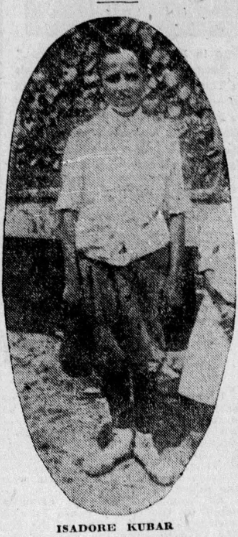
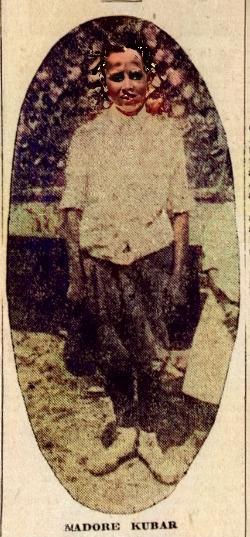
No trace has yet been found of Isadore Kubar, twelve-year-old son of Mr. and Mrs. Paul Kubar of Kuhlthau Avenue, Milltown, who was reported to the Milltown police on Wednesday as having been missing for several weeks. The authorities followed a clue yesterday to the effect that the missing lad had been seen in Jersey City, but were unable to gain any trace of the boy. Kubar’s parents are distracted over his disappearance and the accompanying picture is published in the hope that it may aid in restoring him to his home.


Council Discusses $12,500 Sewage Disposal Strategy

Council Discusses $12,500 Sewage Disposal Strategy

$12,500 COST OF SEWAGE DISPOSAL PLAN


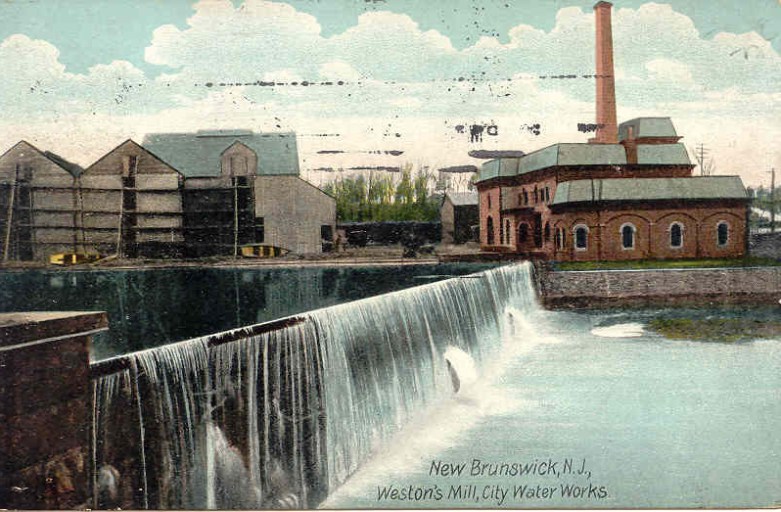
Advisory Water Commission Tells Council the Details of Solution Which Has Been Worked Out Relative to Safeguarding the Water Supply from Milltown Sewage Contamination.

The plans adopted tentatively by the Advisory Water Commission, of this city, in conjunction with the Milltown Sewage and Water Commission, were explained last evening to the members of Common Council, meeting as a committee of the whole.

Ex-Mayor Drury W. Cooper, William H. Benedict, Prof. A. A. Titsworth, Alfred S. March, and Eugene P. Darrow, members of the Advisory Commission, were present, and the matter was gone into at some length.


This Day in History: September 11th, 1922

This Day in History: September 11th, 1922

Bagonye Seized in Civil Action After a Battle


Spiritualist Pastor Barricades Himself at Milltown When Sheriff Appears—Held in County Jail for Lack of Bail.

Eugene Bagonye of Milltown, spiritualist pastor of a Newark congregation, was again taken into custody yesterday afternoon, this time being arrested in a civil action brought against him for the sale of a car on which there was a chattel mortgage.

The arrest was made by Deputy Sheriff William S. Hannah and Constable John Applegate after a lively effort by Bagonye to escape, and he was lodged in the county jail, where he is now being held in default of bail.

Bagonye was in the garden in front of his home when the deputies appeared, but he rushed inside and barred the door. The officers made an effort to break in but were unable to do so and finally made an entry through a side window.

Bagonye had hidden, and they were unable to locate him anywhere in the house. They discovered, however, that there was an attic room, and they believed he was there. The door was barricaded, but Deputy Hannah climbed out on the roof and went through a window. Bagonye then rushed right out of the room into the arms of Constable Applegate, who stopped him at the point of a revolver.

An automobile with the engine running had been kept close by to aid Bagonye’s escape, a young lady from New York, who refused to give her name, being in the machine.

The suit is brought by the David Hall Motor Company of Newark, who claim that Bagonye purchased a new Elgin sedan from them and turned in an old Franklin which he alleged to be clear, but on which there was a chattel mortgage to Abram S. Howell of this city.