Raritan River Railroad Station – An Update and Community Engagement

Raritan River Railroad Station – An Update and Community Engagement

In our endeavor to preserve the Raritan River Railroad Station, significant efforts have been made to create a comprehensive report. This document, developed over time, reflects our commitment to transparency and inclusivity, ensuring all stakeholders, including the public, are well-informed about the project’s progress. The crafting of this report was a challenging but vital task, spearheaded by the Milltown Historic Preservation Committee. Its purpose extends beyond mere documentation; it aims to foster and cultivate relationships between relevant municipal governments and various historical society groups​​.

A Glimpse into the Current Scenario and Future Plans

As highlighted in our report, the Raritan River Railroad Station’s relocation and refurbishment are crucial to preserving a key piece of our community’s history. The report details the station’s current condition, the intricacies of its relocation, and the urgent need for action given the April 2024 deadline​​.

The Importance of Community Involvement

The Raritan River Railroad Station is a significant testament to Milltown’s history and the broader Middlesex County. Its preservation is essential for maintaining a tangible link to our shared past​​. The station’s story and future hinge on our collective efforts and community support.

Upcoming Events and Fundraising Initiatives

We invite the community to join two key fundraising events:

  1. Holiday Concert & Festival: On December 9th, 2023, at St. Pauls United Church Hall, West Lakewood Ave., Milltown, NJ. The event features a Silent Auction, a performance by The Central New Jersey Wind Ensemble, and Santa’s arrival. Admission fees are $10 for adults, $8 for seniors, and varying rates for children and teenagers​​​​​​.
  2. Holiday Train Display: Scheduled for December 9th and 10th, 2023, at the Milltown Senior Center, 60 Violet Terrace, Milltown, NJ. This event includes model train layouts, photo opportunities with Santa, and is priced at $7 for adults, $3 for children, $5 for seniors and vets, and $20 for families of 5+​​​​.

Your participation in these events is a valuable contribution to preserving the Raritan River Railroad Station. Together, we can ensure this historic landmark remains a symbol of our heritage and community spirit for generations to come.
Events


This Day in History: March 16th, 1908

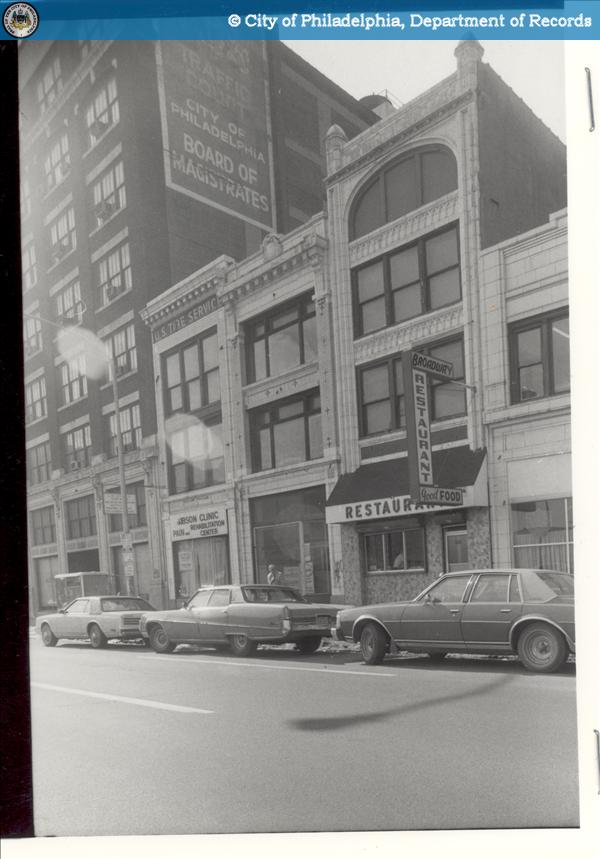
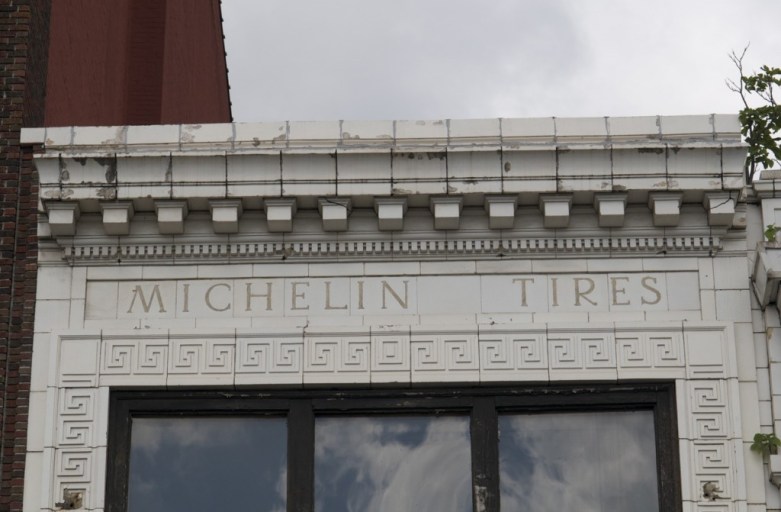
Michelin-Tires-802-N-Broad-Philadelhia-hidden-city-peter-woodall

MICHELIN CO. TO HAVE STRING OF SALESROOMS

Will Have an Individuality About Them -1,000 Now Employed at Milltown.

The world’s record of one hundred miles in 1:12:56 was established by a Renault car, driven by Brenin, and equipped with American made Michelin tires at the auto races held at Ormond Beach, Fla., recently.

The tires with which the car was equipped were made at Milltown. The newly established record, which speaks highly for the Michelin tire, gives an average of 81 7-100 miles per hour.

Despite the financial pressure of late, the factory at Milltown has been working day and night in an effort to get ahead with orders on hand. Over a thousand people are employed at the factory now and more are being taken on daily.

The company expects to open salesrooms in connection with the New York branch at 1763 Broadway, and the decorations of the new salesroom will excel any of those in the auto quarter wherein the new branch store is to be located.

The salesrooms of the Michelin Company throughout the United States will have their own individual design so that they can be instantly recognized. The walls, counters and painting of the various salesrooms will be of the same hue. The colors of the signs of the company which have been plentifully distributed about the country are blue and yellow.

The Michelin Company have now six salesrooms, Boston, New York, Buffalo, Detroit, Cleveland and Chicago. Salesrooms will be opened shortly at Philadelphia, San Francisco and Denver.


Now for an analysis….


At the beginning of the twentieth century the Michelin Tire Company embarked on an ambitious attempt to establish itself within the rapidly expanding American automobile industry. The decision to create a manufacturing base in Milltown, New Jersey in 1907 represented a decisive step in Michelin’s broader strategy of international expansion. During this period the French company established subsidiaries in key global markets, including Great Britain, Italy, and the United States, with the Milltown plant serving as the center of Michelin’s American production from 1907 until 1930.

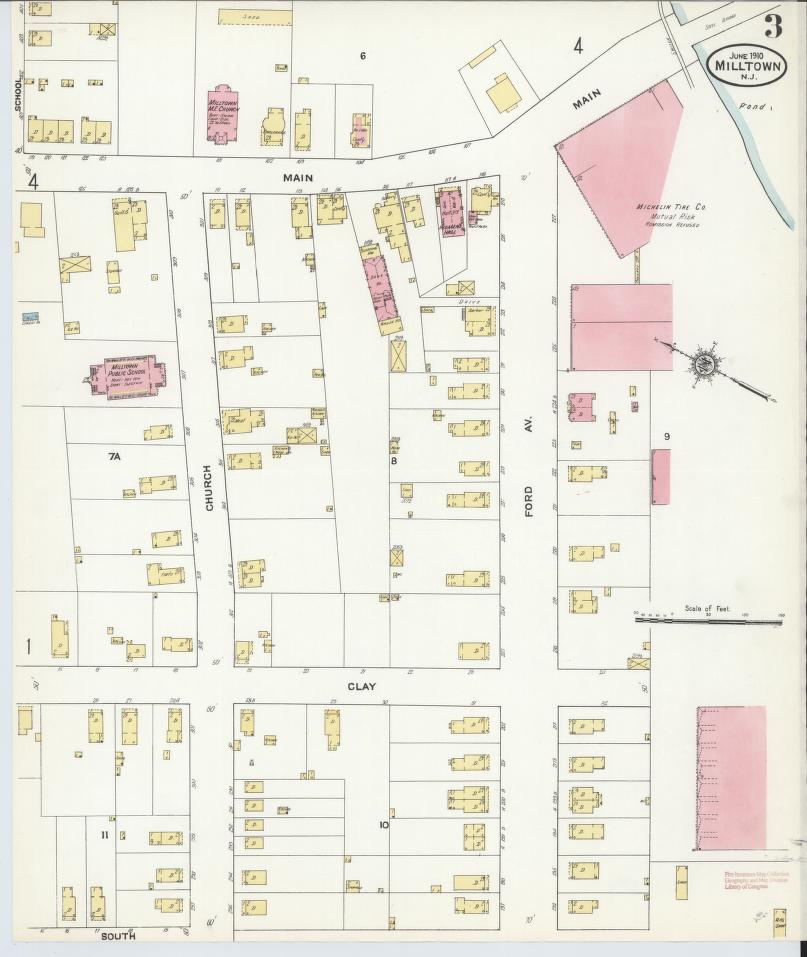
Milltown offered a strategic location for the company’s American operations. Situated in Middlesex County along the Lawrence Brook and less than thirty miles from New York City, the town provided access to rail transport, waterways, and major commercial networks connected to the Atlantic seaboard. The factory complex occupied several hectares and included multiple industrial buildings capable of producing pneumatic automobile tires for the growing American market.

The establishment of the Milltown plant reflected Michelin’s determination to participate directly in the transformation brought about by the automobile. In the first decade of the twentieth century the American tire industry was expanding at an extraordinary pace as automobile production increased and new manufacturers entered the field. Michelin, already well known in Europe for its innovations in pneumatic tire technology, sought to translate its reputation for engineering excellence into success in the United States.

One of the most effective ways tire companies demonstrated the performance of their products during this era was through automobile racing. Before the construction of permanent racing circuits, early speed competitions were frequently held on the hard-packed sands of Florida’s Atlantic coast, particularly at Ormond Beach, which later became closely associated with the racing traditions of nearby Daytona Beach. These beach races attracted international attention and provided manufacturers with an ideal stage to showcase the durability and speed of their vehicles and tires.

Contemporary reports describe a record-setting run at Ormond Beach in which a Renault automobile equipped with Michelin tires manufactured at the Milltown factory achieved a remarkable speed record over a one-hundred-mile distance. Such events were not merely sporting spectacles but carefully publicized demonstrations of industrial capability. By emphasizing that the tires used in the race were produced in the United States at the Milltown facility, Michelin was able to promote its American-made products while reinforcing the prestige of the brand. Racing achievements thus served as a bridge between technological performance and commercial promotion.

At the same time that Michelin was promoting its tires through racing successes, the company was constructing a national commercial presence through a network of salesrooms and distribution centers. The early automobile industry was concentrated in urban districts where manufacturers, parts suppliers, and dealerships clustered along prominent commercial streets. These areas became known as “Automobile Row” districts, and they represented a new form of urban retail landscape created by the rise of the motorcar.

Cities across the United States developed such automotive corridors, and Philadelphia’s North Broad Street became one of the most notable examples. By the early twentieth century the street had evolved into a dense concentration of automobile showrooms, repair facilities, and suppliers of related equipment such as tires and accessories. Michelin’s commercial strategy involved placing branded salesrooms within these districts so that motorists could encounter the company’s products alongside the rapidly expanding array of automobiles entering the American market.

The presence of Michelin offices and salesrooms in cities like Philadelphia demonstrates how the company attempted to integrate itself into the infrastructure of American motoring. These locations served not only as retail outlets but also as centers for advertising and brand visibility. The distinctive colors associated with Michelin—blue and yellow—and the recognizable figure of Bibendum, the Michelin Man, helped the company create a consistent identity across its growing network of urban showrooms.

Although much of the physical infrastructure of these early automotive districts has disappeared, traces of their history remain embedded in the urban landscape. In Philadelphia, for example, the legacy of North Broad Street’s Automobile Row has been documented through historical research and preservation efforts, including those highlighted by Hidden City Philadelphia, which examines the surviving buildings and architectural remnants of the city’s early automotive industry.

Michelin Tires – 802 N Broad Philadelphia – Hidden City – Peter Woodall https://hiddencityphila.org/2011/09/auto-zone/

When viewed together, the stories of Milltown, Ormond Beach, and Automobile Row reveal different dimensions of Michelin’s American venture. The Milltown factory represented the industrial foundation of the enterprise, where tires were manufactured for the American market. The racing events at Ormond Beach demonstrated the technological performance of those products and provided a powerful form of advertising. Meanwhile, the salesrooms located within Automobile Row districts connected Michelin directly to consumers in the urban centers where automobile culture was rapidly taking shape.

These interconnected efforts illustrate the scale of Michelin’s ambitions during its first American expansion. The company invested simultaneously in manufacturing, promotion, and retail distribution, attempting to position itself among the dominant tire manufacturers of the United States. Although the Milltown factory ultimately closed in 1930 after years of intense competition within the American tire industry, the historical record shows that Michelin’s early presence in the United States was marked by considerable innovation and determination.

Today the surviving archival material—from newspaper accounts of racing victories to photographs of the Milltown factory and the remaining architecture of Automobile Row—allows researchers to reconstruct this largely forgotten chapter of industrial history. Through these fragments, the story of Michelin’s early American venture emerges as a compelling example of how global companies sought to navigate the technological and commercial transformations of the automobile age.

This Day in History: March 16th, 1920

Fred DeVoe

ANNEXATION BILL PASSES AS AMENDED
Milltown Measure Has the Boundary Lines Narrowed and Referendum Included—Mayor Kuhlthau Jumps Into Fight—Statement by DeVoe

Mayor Christian Kuhlthau, progressive Mayor of Milltown, took off his coat yesterday and entered the fight for annexing a small portion of North Brunswick Township. At nine o’clock in the morning he instructed Borough Engineer G. P. Stelle to attend the hearing on Bill 237 and ask Assemblyman Fred W. DeVoe to accept a substitute along the lines approved by North Brunswick at the hearing on last Thursday evening, and also insisting that a referendum be placed on the bill for the voters of Milltown.

Ever since the opposition sprung up, which happened while the Mayor was sojourning in the South, the progressiveness which has characterized the preceding administration has been menaced, also the spirit with which the Chamber of Commerce started their organization has been threatened.

Upon arriving home from the South a few days ago, the Mayor was confronted with the old time opposition, which he never expected. The Mayor originated the move for annexation in the Chamber of Commerce about eight months ago, never dreaming but that all parties would favor it. It did not take long for him to size up the situation and he moved quickly. He challenges the opposition to step forward with any fundamental reasonable arguments against it. Seeing the possible defeat of his progressive policy, the Mayor has stepped half way to meet North Brunswick.

North Brunswick Compromise.

The Mayor took into serious consideration the compromise offered by North Brunswick Township and considered that her desire to still control Elkins Lane and the Oak Hill School House was very fair, and as a result he favored only a bill taking in the properties on the south side of Elkins Lane, the Elkins and Gebhardt properties, and the small portion of Vanderbilt Manor. It was with instructions to accept this compromise that the Borough Engineer attended the hearing yesterday. It was said today that sentiment aroused in North Brunswick Township against Bill 237 in its original form made it difficult for the committee from that township to even accept this compromise yesterday, but they chose the committee substitute in preference to the original bill. The lines as finally embodied in the bill were those suggested by North Brunswick at the hearing on last Thursday night in the Council chamber.

Owing to opposition created in Milltown on Bill 237, the Mayor also favored a vote of the people and a referendum was embodied in the bill.

For and Against.

It is expected that the following will line up for the bill: The Mayor, H. R. B. Meyers, president of Chamber of Commerce; Harold Schlosser, president of Council; William Hannah, candidate for Freeholder from Milltown, who attended the hearing yesterday and is in favor of the lines laid down by North Brunswick; James Herbert and Chas. V. L. Booraem, Councilmen; ex-Councilmen Wm. R. Evans and Joseph M. Crabiel, Postmaster John V. L. Booraem, Assemblyman DeVoe and others who have served their borough in the past.

The opposition up to the present is being led by Charles E. Denhart, Spencer Perry, Oscar Lindstrom, Casper Graulich and Charles Wolff.

Middlesex Assemblymen Solid.

Assemblyman DeVoe was ably assisted by Assemblymen Albert W. Appleby and C. Raymond Lyons in the Legislature and the vote was overwhelmingly in favor of the amended bill on third reading, only four or five votes being registered in opposition.

Attorney Irving Hoagland, counsel for North Brunswick appeared at the hearing and objected in behalf of the residents of the township to the proposed new boundary line as provided in the bill.

When the bill came up for a vote, the Mercer County delegation objected to its passage on the ground that the voters in the section to be annexed were not permitted to vote on the annexation, under the provisions of the bill. Mr. DeVoe explained that a petition had been received by him signed by every resident in the area affected requesting that the bill be adopted.

DeVoe Issues Statement.

For the purpose of explaining why he fathered the bill, Assemblyman DeVoe issued the following statement today:

“Two changes were made last night in the Milltown–North Brunswick Annexation Bill, as introduced by me, in order to satisfy the opposition from the Township of North Brunswick, and also to allow those who live in Milltown and who have evidenced a desire to vote on the question, an opportunity to be registered either for or against annexation.

The first change was to so re-adjust the boundary lines that the school house known as Oak Hill School House would remain in the Township of North Brunswick, and not be annexed to the Borough of Milltown, as provided for in the original bill. If the bill becomes a law, as amended, the boundaries of Milltown on the northerly side of Milltown will be as follows: Westerly to the brook called Sucker Brook; northerly on the westerly side of the Berdine’s Corner Road to the gully at the Oak Hill School House; northerly, on the easterly side of the Berdine’s Corner Road, to Elkins Lane, and extending easterly along Elkins Lane to the right of way of the Raritan River Railroad.

The second change, as stated, was the addition of a referendum allowing the voters of Milltown to vote on the question as to whether or not they desire annexation, at the presidential primaries to be held on April 27th. The voters who were registered at the November election in 1919 are eligible to vote at the presidential primaries on this question. Those who were not eligible to vote at the November election in 1919 and are now legal voters of the Borough of Milltown will have an opportunity to be added to the list at a special registry, to be held one week prior to the presidential primaries.

The Chamber of Commerce of Milltown, which has, and will always have, the best interests of Milltown at heart, has endorsed the annexation proposition. A majority of the Common Council of Milltown favors the extension of the borough lines to the boundaries hereinbefore described.”


This Day in History: March 15th, 1915

This Day in History: March 15th, 1915

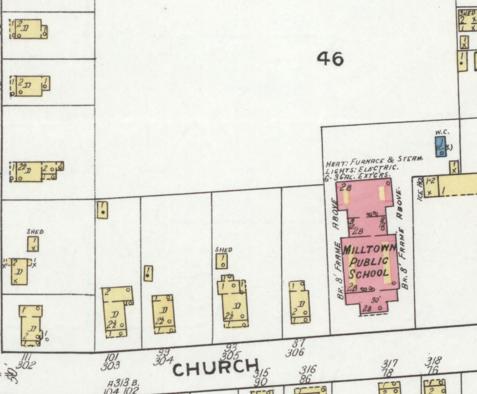
1,500 ATTEND EXHIBITION AT PUBLIC SCHOOL

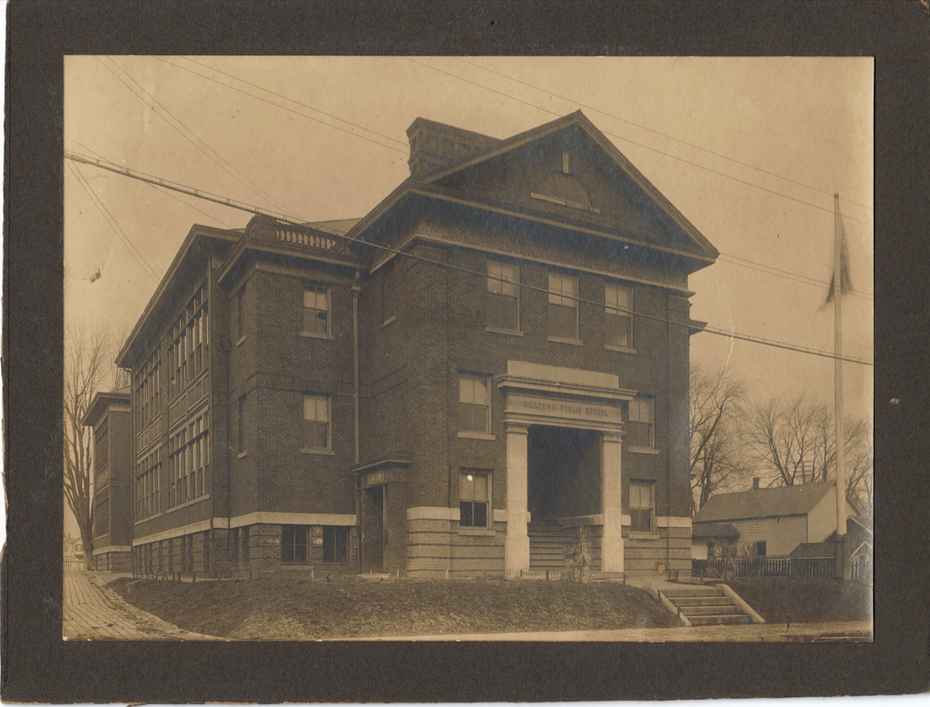
MILLTOWN, March 15.—The general school exhibit which was held at the Milltown public school Friday evening, Saturday morning, afternoon and evening was attended by no less than 1,500 people, and, as stated in Saturday’s Home News, was an affair that surprised many of the town folks. The children and teachers deserve a great deal of praise for the excellent progress that has been made.

School Election To-morrow Night.

The annual school election will be held at the public school to-morrow evening for the purpose of voting on a ten thousand dollar appropriation which is the same as last year, and to elect three members to the Board of Education. The terms of the three members expiring are George Kuhlthau, George Heyl, and William Glock.

Rescue Initiate.

The third degree will be conferred upon John Worthge at a meeting of Rescue Council to be held this evening.

New Members at M. E.

There were three new members taken into the Methodist Church on letter yesterday morning. Preliminary to the sermon yesterday morning Rev. Hand told the members of his church how he appreciated his return to the local charge and that during the coming year it was his aim to still further advance the spiritual work in the church and that he desired the hearty co-operation of each member of his gospel family, meaning the official board.

Minnewawa Camp Fire Meet.

A meeting of the Winnewawa Camp Fire Girls was held at the home of Miss Gertrude Kuhlthau Friday evening, at which time the girls were taking notes as to what to do in case of emergencies, such as fire, frost bites, accidents, etc., after which they journeyed to the school exhibit in a body. Refreshments were served.

Crescents to Banquet at Klein’s With the Ladies.

At a special meeting of the Crescent Club it was decided to hold the annual banquet and ladies’ night of the club at the Hotel Klein, New Brunswick, on Wednesday evening of this week, at 8.30 o’clock, to which all members of the club as well as the Girls’ Crescent Club and their friends are invited.

Klein’s large banquet room has been secured for the occasion and four New York stars, cleverest of all entertainers, in a series of comedy sketches, juggling, monologues, musical selections, operettas, character and dialect songs and stories with costume changes, etc., will take a prominent part. The affair promises to be one of the biggest events of its kind ever attempted by a local organization.

Surprise for Mrs. Crenning.

While attending a meeting of the Tamakwa Camp Fire Girls at the home of Miss Barbara Heil Friday evening, Mrs. William Crenning, who was formerly Miss Myra Brown, of this place, met with another great surprise. She was showered by the large assemblage of friends, the event having been planned by Miss Barbara Heil.

The evening was whiled away too soon in the playing of various games and the bestowing of congratulations upon Mrs. Crenning.

Delicious refreshments were served. The guests included: Mrs. William Crenning, Mrs. Enos Huff, Mrs. Winfield Fine, Mrs. Bernard Gill, Mrs. Clarence Crenning, Mrs. P. McCormick, Mrs. C. Monaghan, Mrs. John, Mrs. John Heil, Mrs. Amos Brown, Misses Blanche Crenning, Mamie Glock, Helen Glock, Viola Thompson, Edythe Kohlhepp, Lillian Downey, Emma Kaiser, Nettie Branaghan, Florence Haywood, Anna Anderson, Rose Dowgin, Gertrude Barney, Anna Holzer, Ella Hart, Lillian Willenbrock, Martha Brandt, Carrie Ochs, Katherine Heil, Anna Holzer, Mae Heil, Barbara Heil and Mrs. George Lins.

Personals.

Mr. and Mrs. Willard Randolph, of Piscataway, were visitors in the borough yesterday.

Mr. and Mrs. Henry Banker, of New Brunswick, and Mr. Albert Sevenhair, of New York City, were visitors at the home of Mr. and Mrs. Charles Sevenhair yesterday.

Mr. and Mrs. Simeon Dunn, of New Brunswick, were visitors in Milltown yesterday.

Ferdinand Christ, of Philadelphia, visited with his folks, Mr. and Mrs. Henry Christ, yesterday.

Miss Beulah Stults, of South River, visited at the home of Mr. and Mrs. James Lyle yesterday.

Mr. and Mrs. Christian Kuhlthau spent Sunday with friends in Roselle Park.

Prayer meeting at the Methodist Church will be held at 7.30 to-morrow evening instead of 8 o’clock.

A meeting of the house committee of the Michelin A. A. will be held this Thursday evening.

Lots of other Milltown news on sporting page.

The S. S. K. Club will hold their regular weekly meeting at the home of Mrs. Arnold Thompson, Washington avenue, on Wednesday evening, March 17, at 8 o’clock.


This Day in History: January 31st, 1903

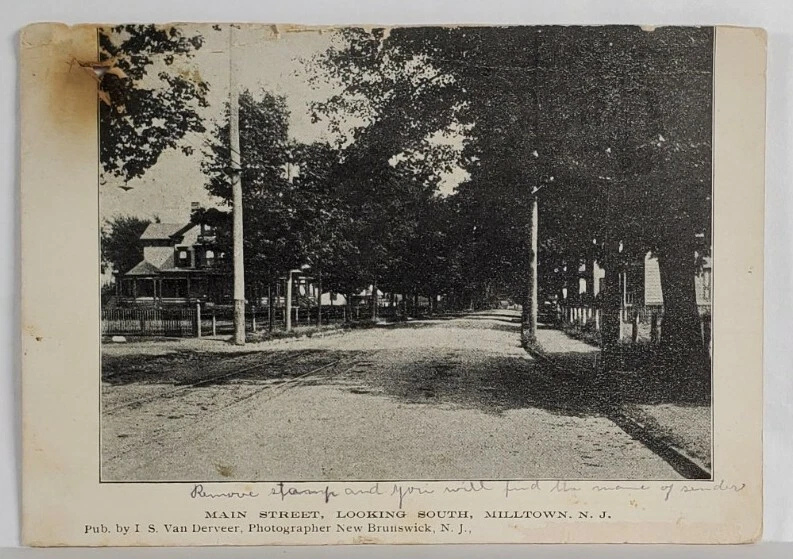
Milltown-NJ-View-on-Main-Street-Looking-South-by-S.-Van-Derveer-1906-Postcard-T2

LIGHTS FOR MILLTOWN;
WHAT SHALL THEY BE?

Citizens Invited to Express Preferences Before the Borough Council.

A special meeting of the Milltown Borough Council will be held to-night in Kohlhepp’s Hall to discuss the lighting project. The general public has been invited to the meeting by notices issued by Clerk Robert A. Harkins, and will be asked to present their views whether or not the borough shall be lighted at the public expense.

If public sentiment is in favor of public lighting, the citizens will then be asked to express their choice as to the illuminant. Three different kinds of lights have been proposed to the Councilmen—electricity, kerosene and gasoline. H. C. Richardson, manager of the Central Electric Company for this section, has been in Milltown recently trying to impress the advantages of electric lights upon the citizens. If the Central Electric Company gets the contract, Milltown will get its light all the way from Metuchen. It has also been suggested that a lighting arrangement might be made with the Middlesex & Somerset Traction Company, which has its power house at Milltown.

Since last spring Milltown has had on trial two gasoline street lamps installed by Charles Anderson, of South River. Mr. Anderson is also after the contract for lighting the borough. The lamps have given good light and are not much trouble and will certainly receive due consideration at to-night’s meeting.

The ordinary kerosene lamps have advocates in Milltown as everybody knows just what can be expected from this light and how much it will cost. The public will have a chance to state its desires to-night, however, and the council is anxious to be guided by the general public sentiment whatever that is. There is little doubt that the citizens will declare in favor of public lighting in some form.


This Day in History: January 14, 1916

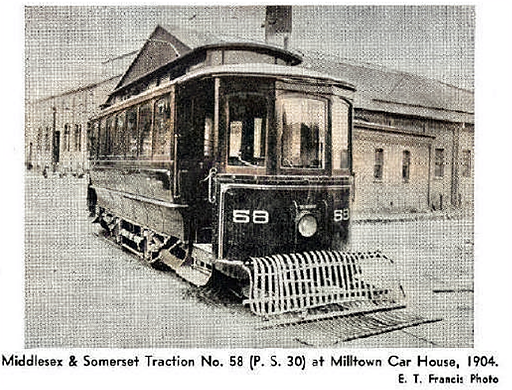
No, 58 - P.S. 30 - at Milltown Car House 1904 - E. T. Francis -
ARCHIVE • The Daily Home News

MILLTOWN GETS MORE TROLLEYS

Big Kick to Public Service Co. Results in Tiretown Council Being Promised More Cars, Especially During Rush Hours, Beginning To-day.

Main Article Click to collapse

MILLTOWN, Jan. 14.—What is considered a creditable victory for the Milltown Borough Council and the Home News is the fact that the action taken at the last regular meeting of the Milltown body, led to a most favorable report being made by the mayor last evening, at the regular monthly session of the Milltown officials, and that is to the effect that beginning today the Public Service Railway Company would put on more cars, especially during the rush hours, and take up the matter of street corner stops instead of midway and unhandy stations as at present.

This news will not only be welcome to the residents of the hustling borough whose officials took the initiative step to remedy a great inconvenience, but to the residents of other similar suffering municipalities along the line of the Public Service Railway Company.

Lawyer Weigel had conferred with the attorneys of South River and Sayreville with a view of taking the matter up with the Public Utility Commission, but if the additional cars bring about the desired results this step will not be taken. There was a complaint entered against the crowded condition and uncleanliness of the cars at times as well as the running schedule.

South River Trust Company Favored

From the fact that there are more local people interested in the South River Trust Company than any other bank in this vicinity, the matter of placing, at least, a part of the borough’s money with this institution was brought up at last night’s meeting, and was favorably acted upon by the local officials who are always on the outlook for the interests of their fellow townsmen. The matter was left in the hands of the finance committee to consult with the collector and with power to dispose of the matter in the most satisfactory manner.

Reading View Bigger text, fewer distractions
Share Snippet Highlight any sentence above to change it

Tip: highlight a sentence in the article to update the quote.

Interactive viewer •

This Day in History: November 28th, 1924

This Day in History: November 28th, 1924

BROKEN RIB PROVES FATAL TO ROBERT MILLS

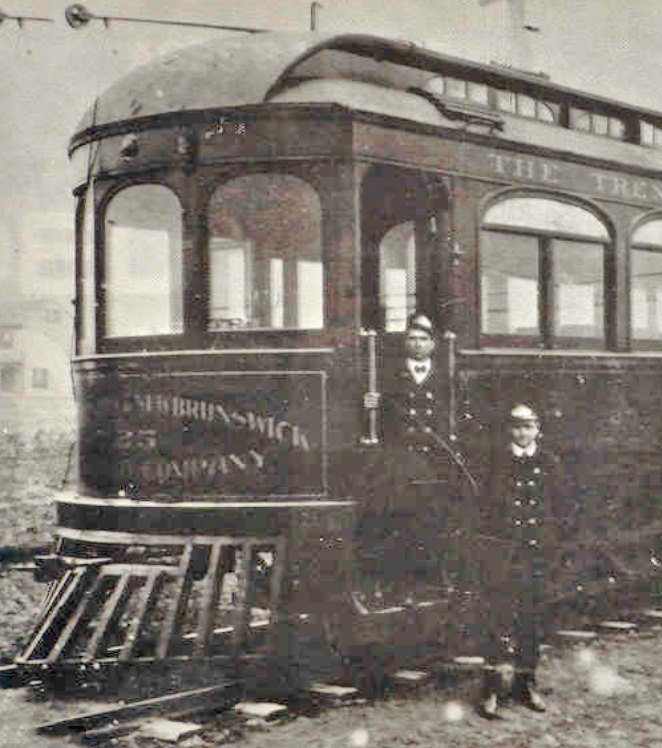
The death of Robert J. Mills of R.F.D. No. 5, in Middlesex Hospital yesterday, was investigated by Chief County Detective Ferd A. David today, when it was learned that the man had been struck by a Public Service trolley car near Heinz’s Switch, Milltown, Monday evening.

No report of the accident was received at the prosecutor’s office from either the Milltown police or the Public Service Railway Company.

As soon as the death occurred the hospital authorities notified Chief County Detective David. His investigation showed that Mills was struck by an Amboy car being run toward this city by LeRoy Higley. The accident is said to have occurred at 10:30 o’clock Monday night. William Haggerty of this city is said to have been in charge of the car, with Higley operating it, who was being instructed.

According to the information secured from the Public Service employees, the car was approaching Foch Street when Mills walked out of the woods into the path of the car. He was picked up and taken to the office of Dr. Forney at Milltown, where he was treated and then removed to the Middlesex Hospital.

Mills’ body was removed to the morgue of Coroner Hubbard this morning, where County Physician John L. Suydam performed an autopsy. This showed that Mills had died from hemorrhages of the lungs, which had been punctured by a broken rib.

Mills boarded with Mrs. H. B. Oswald. His body will be taken by Undertaker Hubbard to La Plata, Md., on Monday for burial.