Christopher Meyer, New Brunswick’s Pioneer Rubber Manufacturer
Born in Germany, He Came to This Country When Fifteen and Soon Climbed Ladder of Success: His Industries Here And in Milltown Were Forerunners of Giant Tire Plants of Today
By MARY R. THOMAS
New Brunswick and New Jersey always have given the finest opportunities for commercial development to men who have had the ability to use them. Therefore, New Brunswick has won a name among her citizens and for her foresight, ability, and industry who have made, each in his or her own individual case, some contribution as well as to world advancement to prosperity and happiness.
The contributions they have made as manufacturers and in careers are enough to inspire the coming generations to meet the test of encouraging young men and women to scale heights in the business world by the cultivation and reliability of their talents and ability and to amass great wealth by their own exertions and good sense. Now it doesn’t seem to really matter how far down in the social scale a young man starts, if he can climb to the top in the industrial world, and has the right qualifications and body to adjust human emotions. That is why certain citizens have done such an honor to the name of the state’s best efforts and the records of New Jersey’s advancement.
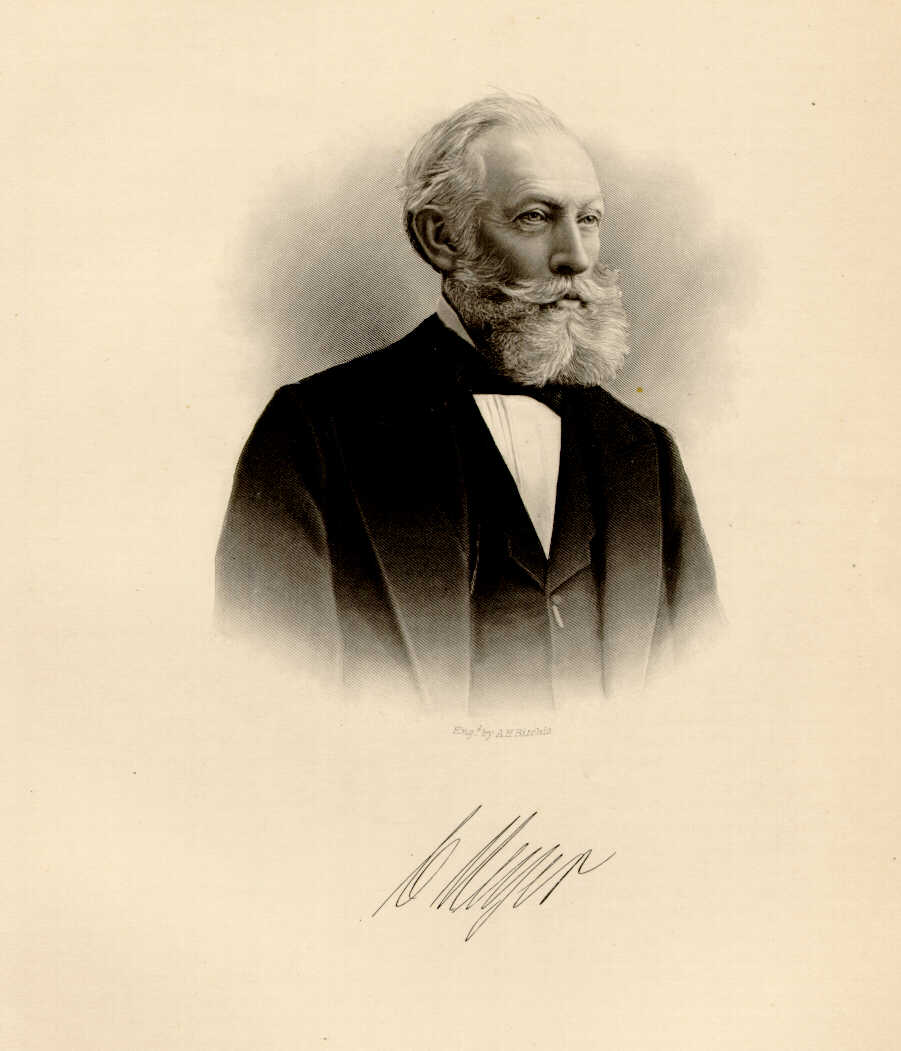
One of the most prominent men in New Jersey’s business world was a young man named Christopher Meyer of New Brunswick, who did a great deal to organize and promote the rubber industry in those years before automobiles were in the world. Probably we never realize today, as all of us had so many conveniences at hand, that it was not the time when all of us would want and need tires. And it may fall short of understanding what need for a vision it took to a man to have the foresight years ahead of his time.
Christopher Meyer was not a native Jersey man. He was of foreign descent from Germany to the United States and did his part to better and win fame for the rubber business and was noted as prominently as anyone else, even during the Civil War days and long afterward.
Born in Germany
Born in Germany, Christopher Meyer came to this country when he was fifteen years old, born in Baden, Germany, in 1836. He was only a boy of fifteen years when he came to America, and like all foreigners of his day, saw there was a place for him in this country, wherever he took a fancy to work, where his knowledge of machinery enabled him to find work in a machine shop where he worked for one year. Then a man named Hugh Maxwell engaged him to superintend the building and setting up of a mill at Ramapo.
Came to New Brunswick to Work
Meyer’s knowledge of machinery was his greatest asset, for in 1852, at Newark Rubber Company, he was engaged by a man named Horace H. Day in perfecting and making machinery for the manufacture of rubber boots and shoes, laying the foundation for his own successful life.
Horace H. Day was New Brunswick’s first rubber manufacturer, in his little shop down on Dennis street. Mr. Day was a young German, was precisely the man he was, so he engaged him for at least two weeks, with the promise of a much larger salary than he dreamed of. It was little enough for the work he was to do, but Meyer soon realized his employer could not afford to pay him more money, and that was likely to be the pay then the best of his knowledge and valuable talents, “for nothing but nothing will come.”
Goes in Business for Himself
He resolved to go in business for himself, though he had no money to start out with. In the way, he often worked half days for his employer and nights for himself, and he put all he made in patterns and plans. Soon he had enough money of his own ready and started for himself, but, though his sufficient understanding and experience, he lacked money to secure always the necessary means for undertaking of a business. He was not discouraged nor stopped him and he borrowed $300 from a banker, and this is the first money he put up and began at Landing Bridge on the Raritan River. Here he succeeded well, though it was only small a thing, he always managed to meet his work and his expenses. He built himself his own and worked his family, and the few men he employed made up the same. At last, he realized he could not alone supply the demand for work, and he leased it to Mr. Peter Onderdonk for a year, where he remained at the factory.
Evidently, he was a good businessman and carried on his factory in such a way as to attract other men for, at the end of that time, he sold out the little factory, if it could be so called, to Onderdonk, which afterward became the nucleus of the New Brunswick Rubber Company. Apparently, Mr. Bishop had kept his eye on the young man for when he went to Onderdonk, Mr. Bishop, who was in business in Milltown with a firm named Ackerman & Bishop, put Christopher Meyer in charge of their plant in Milltown.
In 1854, he conducted a business under the firm name of Ackerman & Bishop for five years but then conducted the Meyer Rubber Company after 1860.
New Brunswick Value
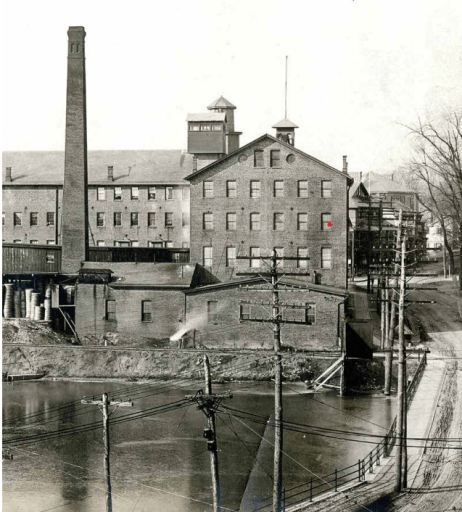
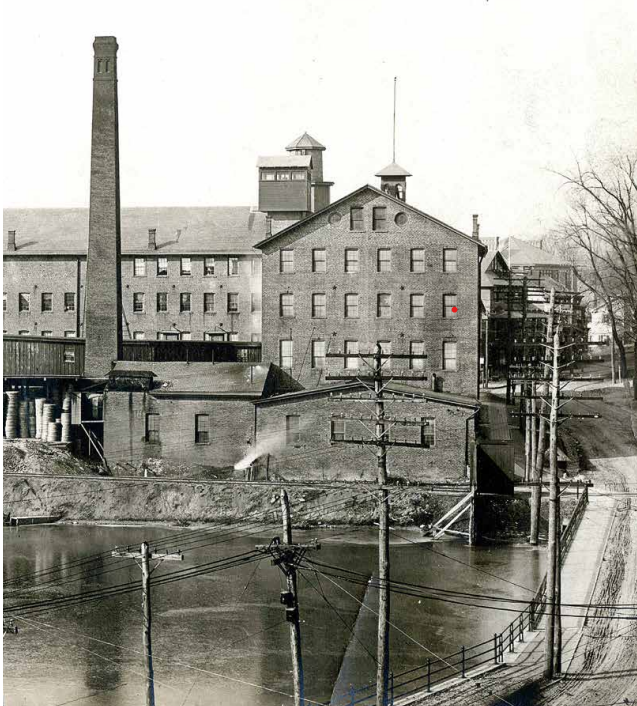
Mr. Meyer, however, recognized New Brunswick’s value as an operating point in the rubber industry, and in 1872 he organized a new company, the New Jersey Rubber Shoe Company, and put up adequate new buildings for manufacturing, down on Little Burnet Street. Of course, he was made president of the company, with a controlling share of stock, and it once went to work to make rubber shoes and other articles, rubber cement, and other supplies.
Later the United States Rubber Company was organized in New York City by the name of the company and companies that were organized and sponsored by Christopher Meyer and its officers: Francis B. Davis, president; W. H. Blackwell, treasurer; and Eric Brockman, secretary. Here are the following out the methods of the founder or others that are an improvement upon them, and more suitable for today’s needs.
In 1892, the name of the old New Jersey Rubber Shoe Company was changed to its present name, the United States Rubber Company, with which James Deshler has been connected since 1874. Mr. Deshler is too well and favorably known to need more of him here. He is one of the best citizens of New Brunswick.
Christopher Meyer died in 1888, but does he still live? This brief sketch is submitted for readers promoting rubber men of later years, his efficient, energetic, and notable business man of the present, as well as of the former, New Brunswick. Mr. Deshler was born in this city on May 9, 1850. In his youth, he became interested in the religion of Pennsylvania, where he spent ten years in his youth, returning to New Brunswick in 1870 on account of disastrous floods there. At once, he became associated with the New Jersey Rubber Company, as it was then called, and has remained with the company ever since, throughout his life and career.
Meyer Died in 1888
Christopher Meyer spent his last years at his home on Fifth Avenue, New York, where he died on July 23, 1888, and was buried in Elmwood Cemetery, where his remains lie today. His son, J. Christopher Meyer, lives in New York City, but New Brunswick may still claim an interest in him, as his two granddaughters, Mrs. J. K. Rice and Mrs. S. N. Rice, live in Highland Park on Adelaide Avenue.
Business Paid Millions Annually
Mr. Meyer became interested in the rubber business when it was in the beginning of America’s largest industries. He developed here a business whose earnings amounted to the millions every year from a modest investment of only a few thousand dollars. Rubber accounted in New Brunswick through the business of Christopher Meyer’s time had far-reaching ways upon the industry throughout the country and had no small effect in making it become what it is today, one of America’s largest, most prosperous commercial enterprises.
In addition to his share in developing the rubber industry in this area and the United States, Mr. Meyer was interested in many other things here in New Brunswick, the gas light company, banking companies, railroad companies, and other enterprises. Indeed, he was a prominent man who contributed his energy and ambition to whatever he went into, he inspired men everywhere.
The businesses Mr. Meyer organized, in association with others, were among the oldest and strongest names in old New Brunswick, the Novelty Rubber Company for the manufacture of hard rubber goods, such as buttons, smokers’ supplies, crochet and knitting needles, match boxes, and tubing rubbed in the turn but made rubber canes in great variety and many other kinds of articles. Their goods were in demand and were shipped to all parts of this country and to various parts of the world, to South Africa, South America, and Australia.
Married New Jersey Girl
Christopher Meyer gave the strongest proof of his love for New Jersey by marrying a New Jersey girl. His wife’s name was Margaret Evans, and she lived in Belleville, New Jersey. He married her in 1864, and they lived in New Jersey, leaving seven children – five daughters and two sons.
An old book in Rutgers Library has this to say of Christopher Meyer, and who would not be proud to have such words said or written of him:
“Mr. Meyer may be safely classed among the self-made business men of the century and an example of what properly directed ambition and a will to succeed under adverse circumstances may achieve.”
This brief sketch of one of the most important industries and its organizer in the New Brunswick of nearly a century ago tells but very little of what may be done. The old-time business men of those days and the business men of the same general subject may today look over a century ago, New Brunswick’s part in this great commercial enterprise, the rubber industry, is very interesting.