FACTORY STILL IS ANTI-TRUST
Milltown Plant, Which Has Just Been Sold, Has Had Interesting History.

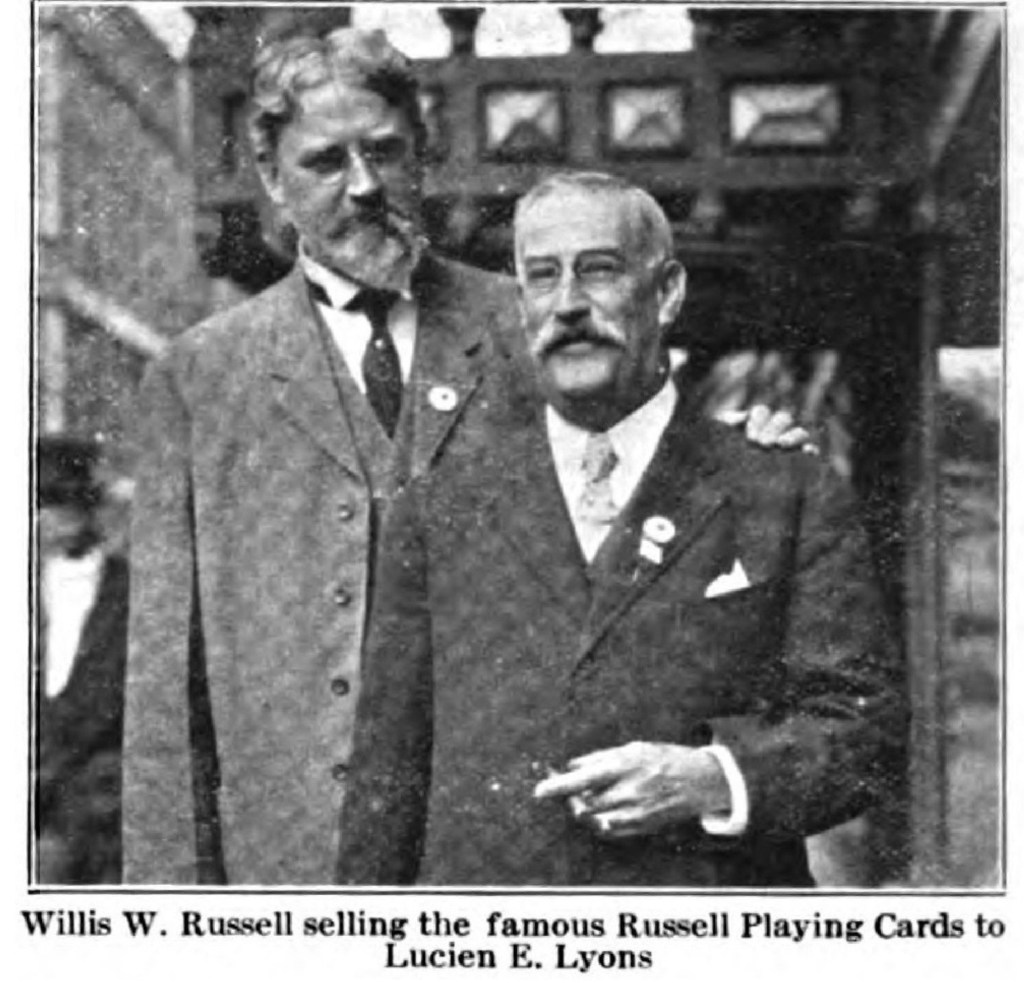
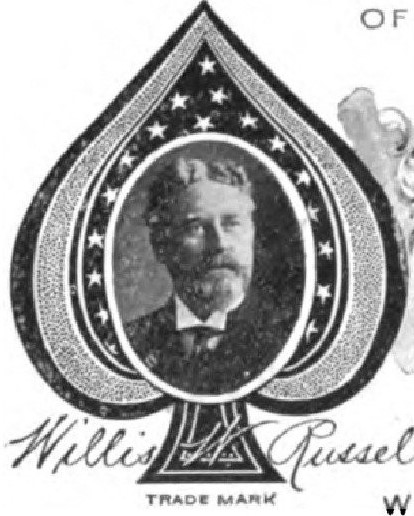
While playing cards are to be made at the Milltown factory just bought by Willis Russell, of New York, the factory will remain an anti-trust factory. It was born an anti-trust factory to buck the rubber trust and now it will buck the playing card trust.
The purchase by Mr. Russell brings to a close a long series of negotiations for the sale of the place. W. K. Lyons, who has been the New Jersey representative for the sale of the place since the U.S. Rubber Company placed it on the market, has been negotiating with firms in London and Paris, as well as a large firm of rug manufacturers of Tabriz, Persia. He has had parties from Chicago and other Western cities here to look at the plant, and the place has been considered in connection with all sorts of business enterprises.
At the time that the deal with Mr. Russell was closed, one of the largest printing press manufacturers in the United States and a large rug manufacturer, who has an office on Fifth Avenue, New York, were also negotiating for the place. The rug manufacturer had offered $10,000 cash for the place, and he had intimated that he would pay the price asked, $48,000, rather than lose the building.
Then a receiver was appointed and, as told in last night’s Home News, the plant was sold by Trustee W. E. Florance to Fred Smith of Providence, who is supposed to have bought the place for the rubber trust.
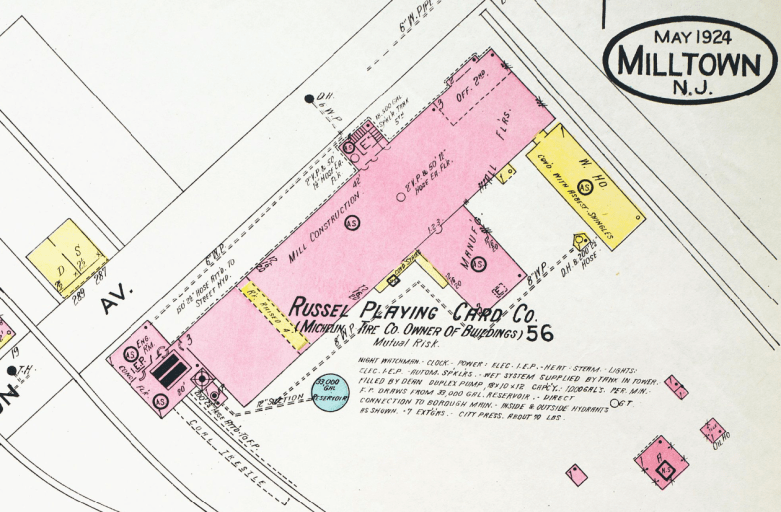
The cornerstone of the plant was laid in 1899, and it was the following spring that the plant began operations. George K. Parnell was the architect. William H. Van Sickle & Son were the mason contractors, and J. & T. Holman were the contracting carpenters for the building.
It was built under the rules of the Mutual Insurance Company. It has patent ceiling sprinklers, automatic iron doors, and the stairways are enclosed in brick towers outside the main walls. It has railroad switches and spurs, tracks, and cars on two upper floors. The main building is 302 feet long by 60 feet wide, the ells are 40×58 feet, and the tower is 23×23 feet. The floor space is 57,500 square feet.
The new factory will be a great boon to Milltown, and it is to be hoped to New Brunswick, as many of the hands will be drawn from here.
“There is a decided boom in factories at the present time, in fact more demand than we can supply in and around New Brunswick,” said Mr. Lyons in an interview. “For some reason, not only are manufacturers coming out from New York, but we have applications from both the Northwest and East. Our New York factories have not been in as great demand as those out of town, and nearby towns are offering all sorts of inducements, while we offer nothing but low prices and facilities.”
“Mr. Russell feels he has obtained a great bargain as a New York appraiser has assured him it would cost him $165,000 to replace today.”
On the first of the year, the price was raised to $50,000, and it was then that Mr. Russell secured the building. The papers for the deal were signed in the office of Nichols & Co., with whom Mr. Lyons is associated in factories and factory sites.
Mr. Russell says that he will begin operations as soon as he can equip the building for his purposes. He has engaged Mr. Perry, of Milltown, as master mechanic and engineer. Mr. Perry was formerly with the Milltown Rubber Company, and also with the United States Rubber Company.
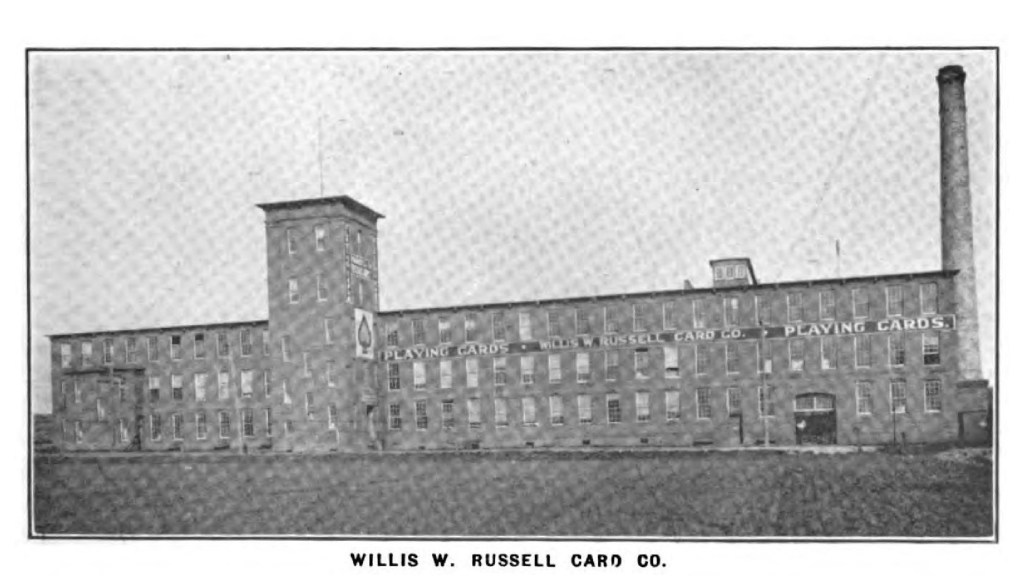
The building has had an interesting history. After the Milltown branch of the United States Rubber Company had been idle for years, the late John C. Evans, who had been the superintendent of the trust factory, severed his connections and built the immense brick structure which became known as the Milltown India Rubber Co.
He threw his whole energy into the building of the plant, equipping it with modern methods of making rubber shoes. Local capital invested into the enterprise heavily. Besides the people of Milltown, who entered into the company willingly with their savings in order to start again the industry which had been the support of Milltown for years, New Brunswick people invested their money. Edward H. Radel, Gottfried Krueger, and Matthew Suydam were among the principal investors.
The company had a hard time fighting the trust. At first, it seemed prosperous, but at times when more money was needed to put into the business, the money was not forthcoming, and the concern was pushed to the wall. The strain told on Mr. Evans, and he died suddenly of a stroke of apoplexy.