This Day in History: September 14th, 1907

This Day in History: September 14th, 1907

THIEF RANSACKS MR. FONTAINE’S RESIDENCE
VICE PRESIDENT OF MICHELIN TIRE COMPANY


Vice-President Emile Fontaine’s residence on Main Street, Milltown, was burglarized last evening. The thief made off with jewelry and money, managing to escape without being detected.

Mr. Fontaine is the vice-president of the Michelin Tire Company and resides in the recently purchased Sine residence by Dr. Ferdinand Riva. The family retired at 10 p.m. The nurse and interpreter, Miss Anlee Holohan, was partially awakened by someone passing through her room before dawn. She also heard noises downstairs but, as she had asked the cook to wake her early, she didn’t pay much attention to it.

When the cook came downstairs at 6 o’clock this morning, she was startled to find the kitchen door wide open with the doormat in place, and the window screen on the steps. It was evident that the thief had entered through the window.

A thorough search of the house had been conducted, but some items were overlooked. One hundred dollars belonging to Miss Holohan had disappeared.

Clothing Stolen from His Room
Superintendent Fontaine noticed early this morning that his clothing was missing from his room but found it at the top of the stairs. His silver watch and chain, purchased in Paris, were gone. A silver dollar had been taken from his vest pocket, along with some loose change.

Mrs. Fontaine discovered a small decorative platter halfway down the stairs, and her silver watch, along with a fine long gold chain for her neck, was missing. The chain was valued at $32 in Paris. An old gold watch of English make and a gold brooch, both belonging to Miss Holohan, were also taken. These items held significant sentimental value for her.

It was clear that the thief had moved silently through the house and taken great care not to disturb anyone further.

At half-past six this morning, Superintendent Fontaine called Justice Headley to conduct an investigation in his home. Naturally, the family was highly alarmed but relieved that no more had been stolen.

It seems that there has been recent prowling by thieves in this area of Milltown, likely taking advantage of the darkness resulting from malfunctioning electric lights.

Thief Spotted Multiple Times
Mrs. Frederic Bauries spotted a man near her kitchen door at 1 o’clock one morning. He disappeared immediately. She had also noticed someone prowling around Justice Headley’s property around midnight on another occasion.

On a separate occasion, she frightened off a man attempting to enter her neighbor Charles Sevenhair’s window.

The same thief proceeded to David Nevius’ house and woke him up around 5 o’clock this morning. The thief was seen searching through Mr. Nevius’ trouser pockets. Mr. Nevius attempted to confront the thief but had trouble loading a cartridge into his gun, allowing the thief to escape. The thief managed to steal some money during this encounter.


This Day in History: August 2nd, 1923

This Day in History: August 2nd, 1923

FACTORY HEADS HAVE ONLY PRAISE FOR LOCAL JITNEYS

Industrial Chieftains Report Almost No Tardiness On Part of Employees.

MANLEY AGAINST EXCESSIVE FARES

The trolley strike has had no adverse effect upon the larger industries of New Brunswick and vicinity. Almost complete satisfaction with the emergency jitney service was expressed this morning by the manufacturers, who report ed practically no tardiness among the employees. The strike hasn’t affected us at all. “We have more hands at work today than we had on Tuesday,” and “We had fewer tardy workers today than we have had at any other time this year.” were some of the reports given by industrial heads. One official said so far an conditions indicated at his plant, there was no strike The Jitneys are making it a point to start shortly before 6 a. m. and every available bus is in operation between 6 and 9 o’clock. Many buses are also in operation during the noon hours and in the evening, while throughout the day A smaller number of machines are on the streets. The manufacturers had no hesitancy in declaring this morning that the trolley strike is not at all noticeable at their plants. They said the buses were giving excel- lent service and some employers declared better service was being given by the Jitneys than the trolley cars gave. “We are depending entirely on the buses of Mr. Lyons, as we have in the past. for the transportation of our employees,” said John Sokoloff of the Squibb Laboratories on George’s Road. “We are getting the best of service and there has been absolutely no lateness at the Squibb plant. We don’t even know there is a strike on. so dependable is the service at-c forded by Mr. Lyons.”

At Cigar Factory

A similarly cheerful report came from the General Cigar Company on Somerset street, where several hundred people are employed. “We have no particular trouble at our plant because of the strike,” said Jesse Strauss, general manager. “We have a large number of employs living in Piscatawaytown. Berdine’s Corner. Lindenau and other places but they have had no trouble thus far in getting to work. We are getting fine service and the employees during the past two mornings have arrived earlier than usual. The buses have more speed and are maintaining an excellent schedule and I have only praise for them.” said Mr. Strauss. The question of fares was raised by John A. Manley of the Johnson Johnson plant, who declared the city should prohibit excessive charging. “We have no real cause to complain as to the service,” said Mr. Manley. “It is comparatively satisfactory.” Mr. Manley pointed to the charge made by two Coney Island bus owners who made a trip from Bound Brook yesterday morning and charged fifty cents for a single trip. He also rebelled against the position of a ten cent fare in other cases. “You must remember that the Public Service asked for a tenement fare and was denied it. I believe the Jitneys should be stopped from charging this excessive fare. We should be fair in the matter and give the Public Service a square deal,” said Mr. Manley.  

Musical String Report

O. U. Page, general manager of the Musical String Company, declared that the service given local employees was of the best and there was absolutely no room for com- plaint but difficulty was being encountered in transporting employees from Berdine’s Corner and Mill- town. As for three employees residing in Bound Brook they were absolutely up against It. There is no service between Milltown and our plant and the buses operating to Berdine’s Corner do not go far enough out George’s Road to accommodate some of the employees. We plan to operate a truck for the transportation of our help to these two points. As for the employees living in New Brunswick and Piscatawaytown, excellent service is provided for them by the jitney,” said Mr. Page. Leslie P. Johnson of the employment department of the International Motor Company declared a few of the employers were inconvenienced but on the whole, the strike hasn’t affected this plant There is comparatively no tardiness and with the exception of the inconvenience to a few hands, we have nothing to complain about.” said Mr. Johnson. Between 500 and 600 employees) are being transported to the Raritan Arsenal by the buses and J. F Armstead of the arsenal declared this morning that the officials there were perfectly satisfied. “Buses are operating to our plant from New Brunswick and Perth Am boy and they are giving the heat of service, in fact better than the trolley cars for the buses are maintaining a better schedule. Tardiness was not as prevalent today as it was during the operation of the trolley cars.” said Mr. Olmsted.

Michelin Tire Plant

No trouble is being encountered at the Michelin plant, it was stated today by H. R. B. Meyers, employment manager and mayor of Milltown. He declared that the service provided by Commissioner Connolly of New Brunswick, the Raritan River Railroad, private autos and the Michelin cars for transportation of the Michelin employees was satisfactory. “Outside of the extra work of arranging the transportation, everything is lovely at the Michelin plant.” said Mr. Meyers. “All our employees are being provided with transportation and there is practically no inconvenience being experienced.”    

SIDELIGHTS ON TROLLEY STRIKE AS SEEN BY SCRIBE

Thousands of people who were strangers to jitney rode on buses yesterday, some with an air of curiosity, and some as if to say “I’ll go wherever the jitney takes me.”

Every pedestrian was able to be taken for an Information bureau, for one person after another approached people along the curb watching the constant stream of motor vehicles, and asked if this or that bus stopped there, and how to get to this place or that.

Jitney riders apparently paid no attention to the big signs on the cars. At the Jitney stand, many e would get aboard the first Jitney to pull into the curb, only to learn later that they were on the wrong Jitney. It was a case of getting off and waiting until the right one came along.

One aged couple loaded down with a suitcase of the vintage of 1776 waited at the jitney stand for over an hour for a Raritan Arsenal bus. At least four buses for the arsenal pulled away from the stand while they waited. Traffic Officer Wilcox, who inquired as to their destination, found they could not speak or write English. A friendly pedestrian spoke to them In a foreign tongue and learned their destination. It was not long before they were on their way to the arsenal.

The swan song at the jitney stand all day yesterday was “Where is the Bound Brook bus?” They are still singing it today as the local Jitneys refused to make the trip because of the impassable condition of the road. Regular commuters are compelled to ride to Metuchen and take a Plainfield bus and change at Plainfield for Bound Brook.  

These taxi drivers! Visions of fur coats, trips to Florida, college educations for the children and Paris gowns for wives hung about them like pleasant halos as they shouted, “Fare! Fare!” Were they busy? They were not.

Many taxicabs were available throughout the day in front of the railroad station, but there were few riders for some reason Or other. People either walked or took to the “its” One woman of foreign descent and of bulky proportions, and carrying a large bundle, had a tough job finding her bus.

Every time a bus pulled into the jitney stand, she got aboard. Learning each time that late was on the wrong bus, she rent the air with foreign lingo, that sounded like real “honest to goodness” scar words. Many suburban couples were compelled to take their wives along on their ride to business. On this account many pretty little misses were left waiting for another car- a jitney.

When the 11 o’clock shift left the Michelin plant in Milltown last night, numerous buses were waiting. These are better than trolleys,” said several passengers to Matthew Hogarty, bus inspector, who was on hand to look things over.  

The good-looking girls waiting for a ride to the Michelin plant this morning had the pick of sport cars, with the result that two Big Walter Raleighs nearly had a collision at the corner of Commercial avenue and George street. Commissioner Jaques has issued instructions to the police officers to give every aid possible to the Jitneys in helping care for the public. The cops were on the job and seemed to enjoy the task.

A big gang of workmen arrived this morning to complete the pavement on French street, near the Jitney station, which has been torn up for the past week. It seems that even the Public Service is willing to lend a helping hand to the “it” The blocks between. the rails were torn up a week ago, causing great inconvenience to the traveling public. The workmen today declared the pavement would be re-laid before dusk. For one thing. they were not disturbed in their work by trolley cars.

A Highland Park resident sold his automobile on Monday. “Guess I’m out of luck.” was his cry last evening as he waited at the Jitney stand for a car to take him home. He didn’t have to wait long as a jitney for the neighboring borough leaves every five minutes.

Traffic Officer John Manley at the corner of George and Albany streets missed (7) the rattling of the trolley cars as he directed traffic yesterday and today.

The bus owners are cooperating with the city officials in giving safe and adequate service. The owners of the buses were scattered along the various routes acting as inspectors. They will work with the police and bus inspectors in preventing any excess charges. No authorized bus operator is permitted to charge more than a five-cent fare and violations of this order will meet with prompt suspension or dismissal. The only thing unusual about the Milltown car barns today was the lack of trolley cars switching in and out. Quietness prevailed.

The employees, dressed in their Sunday best, gathered on Albany street and witnessed the buses pull away from the jitney stand loaded to the roof. The office of the Public Service Railway on Albany street was closed to the public yesterday and there was no sign on the door to acquaint the public the reasons therefore. Secretary Atkinson of the Board a of Trade is playing the part of the Good Samaritan by transporting his fair daughter, Miss Lillian, and  her Highland Park friends to the Michelin plant. Commissioner Connolly asked today that the public be patient for a few days if the bus service does not immediately come up to expectations.

The additional buses and the many changes in routes which to a certain extent are experimental, may cause a little con- fusion for a few days. This, Mr. Connolly says, will be corrected eventually. Commissioner Connolly rode over a proposed detour through the O’Rourke farm yesterday and found the going anything but pleasant. A force of men were grading and filing the low spots preparatory to building a temporary road. buses will be permitted to travel over this route until it is placed in safe condition.  

A bus inspector is detailed on every loaded bus to Milltown to assure the passengers of safety. The detour followed to Milltown is through the College Farm and Ryder’s Lane. The two bridges on the lane are in weak condition and as a precautionary measure. the passengers are compelled to alight upon reaching the bridges. Thomas Lyons, owner of the big Mack bases, gave a helping hand to the Michelin employes when he placed one of these buses: on the line at the request of Commissioner Connolly during the rush hours. Meyer Shift of the Burnet street line has a bus operating continually on the Milltown line in the hope of solving the transportation problem for the borough residents The Michelin office employes were discharged at 4:45 o’clock yesterday afternoon to permit them to make connections with the Raritan River Railroad out of Milltown Upon reaching New Brunswick, buses were waiting to carry them to the center of the city. I

t was believed that the schedule of the Raritan River line would be so altered as to meet conditions. but officials of the road have as yet made no changes. The present schedule doesn’t conform with the working schedule at the Michelin: plant and hence the advancement of the quitting time for the office hands by fifteen minutes. The buses were working smoothly last evening after a day of excitement among the operators and the city officials. The big rush between 5 and 6 o’clock was handled as smoothly as one could expect. No one had to walt more than fifteen minutes for any bus and the city buses were passing up and down Albany street every six or seven minutes.  


This Day in History: July 30th, 1923

This Day in History: July 30th, 1923

RARITAN RIVER RAILROAD READY TO RUN EXTRA TRAINS TO HELP IN STRIKE EMERGENCY

CONFERENCE HELD TODAY BY MICHELIN OFFICIALS; AUTHORITIES HERE BUSY

Commissioner Connolly and Jitneurs to Map Bus Routes This Evening-Traffic Situation Gives Concern.

Officials of the Raritan River Railroad Company stated this morning that they would be glad to do what they could to accommodate public in the case of a trolley strike, which now seems a practical certainty beginning at 4 a. m. Wednesday. Bus service is expected to be sufficient to handle traffic between New Brunswick and most areas in the county, with the probable exception of Milltown. The Michelin Tire Company employees in New Brunswick number about 800, the great majority of whom make the trip by trolley car.

In addition to the Michelin workers who live here there are employees of other plants who commute between the two towns. The fact that the road from Berdine’s Corner into Milltown is torn up makes the establishment of satisfactory bus service difficulty. Buses have to detour by back roads, which requires a trip of about half an hour instead of half that time in which it could be made if the regular road was open.

The addition of a few trains to and from Milltown and adequate. bus service to the Raritan River Railroad Station here would doubtless take care of the traffic in satisfactory fashion. Superintendent T. Filskov of the Raritan River stated at South Amboy this morning that there had been no request for additional service but that the railroad could provide it if needed. There is practically no traffic between New Brunswick and Milltown over the railroad ordinarily. Trains leave here at 7:40 and 11:15 a. m. and at 3.41 and 5:20 p. m. daylight time. Trains leave Milltown for New Brunswick at 7:20 and 9:48 a. m. and 3:10 and 5:04 p. m.

A conference was held at the Michelin offices this afternoon to consider the transportation problem. Superintendent H. R. Meyers is giving she matter close attention, and expects to take up with the Raritan River the establishment of additional train service. “The greatest difficulty anticipated is with the shift which comes on duty at 11:30 p. m..” he said. “Three is no train from, South Amboy or from New Brunswick to bring the men here. There are trains in from South Amboy at 7:14 a. m. and 3:14 p. m., which provide very satisfactory service from that direction. There are trains out to South Amboy at 7:45 a. m. and 3:45 and 5:29 p. m., which suit our shifts finely.” Mr. Meyers said that trains to New Brunswick about 7.45 am and 5.30 pm, for the accommodation of the factory employees and trains which would get the office employees numbering 200, to the plant by 8 a. m. and away shortly after 5 p. m. are what are needed. with bus service to and from the station in New Brunswick, Bus service between New Brunswick and Milltown will be established despite the torn-up condition of the road.

Strike Vote Here

At the same hour that the 253 local trolleymen of the Public Service Railway Company vote on the question of a strike at a meeting in the Union Labor Headquarters on George street this evening. Commissioner Frank A. Connolly and the Jitney officers and inspectors will meet at the City Hall to map & schedule for the accommodation of the riding public. The meeting of the local trolleymen tonight will take place at 8 o’clock at the Central Labor Headquarters and it is expected that the large majority of the 153 trolleymen will participate in the balloting. The crews working at the time of the balloting will be permitted to vote at the car barns early tomorrow morning, at the end of their runs The Public Service officials have announced that if the men strike. no attempt will be made to move able trolleys on Wednesday morning. The riding public will be forced to rely entirely on the jitneys and private conveyances and suburban residents are bound to be affected by the cessation of traffic. The loss to the merchants of New Brunswick will be serious as the Jitneys can scarcely handle the traffic. The main lines of course will be well served but other lines will be seriously affected. Commissioner Connolly T E conference this morning with the Jitneurs when the matter of transportation was discussed. The bus line to South Amboy will be operated on a fifteen-minute schedule The Perth Amboy line will also be served with a fifteen minute headway.

Distribution of Bases

The residents of Lindenau will be served by one or two bases under a half-hour schedule. The residents of Highland Park will have a six-minute headway with the buses operating between Sath avenue and Codwine avenue. If the strike becomes effective on Wednesday, five buses will be placed on the Highland Park line. In addition to the buses operating on Codwise avenue, three bases will operate on Livingston avenue at a six-minute headway. Commissioner Connolly has run up against a “tone wall” in procuring buses to operate between New Brunswick and Bound Brook. and New Brunswick and Milltown. There are no bus lines operating between these communities and the deplorable condition of the road makes it almost impossible to persuade any of the bus operators to attempt to operate on either of these lines. During the strike, buses operating on Easton avenue and Remsen avenue will alternate and it is arranged that instead of three buses running on this line, two buses will operate on the Easton avenue- Remsen avenue line and two between Easton avenue and Throop avenue Under the plans devised by Commissioner Connolly at least fifty buses will be in operation on Wednesday if the strike is declared. The regular licensed buses operating in New Brunswick number thirty-two and through the efforts of Mr. Connolly, eighteen additional buses have been procured.


This Day in History: July 10th, 1926

This Day in History: July 10th, 1926

Milltown National Bank 1924 - North Main Street

MILLTOWN BANK ROBBER MAKES BREAK

Bitzberger and Another Caught After Sawing Prison Bars

PRISON DEPUTY FOILS ATTEMPT

Harry Bitzberger, who attempted the robbery of the First National Bank of Milltown in 1921 and was sent to prison, made his second Attempt to escape yesterday with James Ayres, another dangerous criminal, but the try was foiled by prison deputy, According to prison officials it was evidently the intention of the prisoners to attack one of the guards on duty in the wing in which they were confined. The guards are locked Inside the wing and the keys are kept inside the centre.” Principal Keeper Joseph Hoff said last night it would have been impossible for the two prisoners to have even gotten outside of the wing. Bitzberger has finished his term for the Milltown bank robbery and is now serving a term of from six years and eight months to ten years for an attempted post office robbery. Ayres is serving a term of from fourteen to twenty-two years.

First Attempt

Last March Bitzberger attempted to escape by sawing four bars of his cell while confined to No. A Wing. It was shortly after 2 o’clock in the morning that a deputy found the bars had been sawed, and upon investigation discovered that Bitzberger had some extra clothing in his cell besides an improvised ladder made from material he had stolen from the printing establishment where hewas then employed. He was then placed in solitary confinement in one of the old cells in Old South Hall. With the heavy wooden door protecting him from the sight of the deputies on duty, he found time to make another attempt to escape. Twisting one of the iron legs from his bed he und it as a tool to dig through the stone floor. It was his object to dig a hole leading to the lavatory pipes and following this course to the “centre.” Keeper Hoff then had him transferred to what is known as “douhis solitary” in No. 7 Wing. Ayres sawed the bars of his cell, but the discovery was made before he had gotten into the wing. He, too, was placed in No. 7 Wing. The two prisoners occupied cells some distance apart on the third tier. There are 350 convicts in that wing.

Used Steel Bit

Bitzenberger used a small steel hit to remove the bolts holding the bars in place. The piece he removed was just about large enough for the convict to squeeze through. In the rear of the cells is an air shaft leading to the roof. There are no ventilators in the roof, all the openings having been cemented up some time ago by Keeper Hoff. Bitzberger ripped the small wooden stand apart in his cell and wrapped pieces of clothing around two of the legs. It is believed that be was to pass one of these improvised blackjacks to his pal if they had to fight their way out of the wing All the cells in No. 7 Wing are surrounded by heavy outer bars and convicts would have to also saw through these bars before they could reach the corridor of the wing.

Found by Kenney

Deputy Lloyd of Lamberton street, Trenton, was making his daily inspection of the cells yesterday when he discovered the bars sawed and the piece of plate removed from the rear of the ether cell. When Deputy Kenney entered the cells both convicts remarked that they “had been caught this time.” The matter was reported to Keeper Hoff and Bitzberger was removed to a cell in Old South Hall. Ayres was placed in another cell in a different part of the wing, where he had been in solitary confinement for many months. The repairs to the two cells were made at once. Bitzberger was received at the prison on January 14, 1921, and was paroled on December 19, 1924 When he left the prison he told Keeper Hoff that he was going “Straight.” Following a visit to his wife at Lancaster, Pa, he returned to New Jersey and became complicated in the robbery of A postoffice at Hackensack.

On May 1925, he was returned to the prison to serve a long term. He has also served time in the government penitentiary at Leavenworth. When the two cells were search yesterday a steel bit was found in the one occupied by Bitzberger, but the brace could not be located. All steel saw was found in Ayres cell.  


This Day in History: June 30th, 1920

lightning during nighttime

Worst Ever at Milltown

MILLTOWN, June 30 – Early last night Milltown witnessed the most furious storm that has struck the community in many a day when trees, chimneys, telegraph poles, fences, windows, feed, electric, telephone and trolley wires came face to face with a raging tempest that swept every- thing possible from its route and left many badly demolished places.

The first shower, which came at 5.45 o’clock, was by far the worse in so far as it carried a blinding gale of wind that smashed windows and cut down trees in rapid-fire or- der. The hail was also exceptionally heavy in the first shower. Damage was done in all parts of the borough, the northern section feeling it most, although the Washington avenue section received considerable damage.

At the home of C. W. Kuhlthau in North Milltown, the windows of the back porch were knocked directly out and the back chimney swept off at the roof.

Fruit trees in all sections were targets for the wind and the owners will suffer heavily. The home of Samuel Gordon was struck by lightning and part of the roof ripped off.

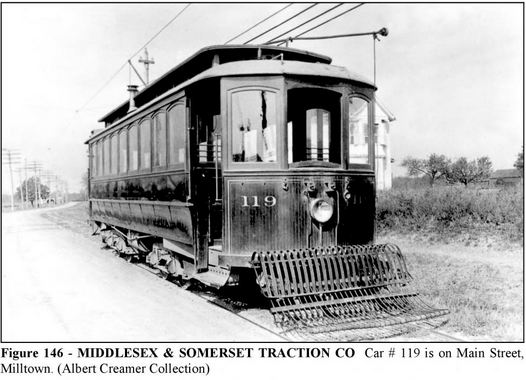
Main street looked like a forest and the Trenton trolley line was completely blocked off for a distance of possibly 400 feet, due to seven poles being torn loose and thrown across the tracks and all wires down. Men were working at a late hour last night endeavoring to loosen the wire entanglement.

Those who have seen many, storms in Milltown claim the one of last night to far excel all others in tumultuous effort.

Panic On Trolley Car.

 A Milltown trolley car in which a number of Michelin employees were returning to this city during the first storm was struck by a lightning bolt. The passengers were greatly frightened as the flames began shooting through the car. A mad dash was made for the exits while the conductor tried in vain to get the window on the back platform open in order to pull the trolley pole off the wire. The passengers sought refuge in nearby homes.

During the second shower a bolt! struck the large barn on the farm of Mrs. W Hannah, Lincoln Highway, and split it from top to bottom.

In St. Peter’s Cemetery and along the Lincoln Highway large branches of trees are down and in some in- stances the trees were split in half.

At Berdine’s Corner, a large barn near Becker & Eckert’s garage, belonging to the Vandewater family and which was in process of being converted into a dwelling, was blown into the next field and turned over on its side. Trees and telephone wires are down almost wholesale in that section.

A house in the process of construction near the Musical String plant was blown from its foundation.


This Day in History: May 25th, 1919

This Day in History: May 25th, 1919

Milltown’s Fine Opportunity to Become More Attractive


In the second installment of hist Interesting article Mr. H. M. Olmsted continues his constructive suggestions for making Milltown an attractive place to live. In the first part The wrote about the many natural advantages already there for making a bigger development possible, in this The goes more into details for creating new features, besides developing the old ones, as follows:

A Cool Atmosphere.

If the reader has visited Salt Lake City, Utah, he will remember having- noted with pleasure the cool, frag- rant, bracing air of that city.

Also he will recall the rivulets of pure fast flowing water coursing down the regularly constructed concrete gutters at each curbing of the main streets. Long ago, that city decided to in- stall an improvement which is peculiar to Western towns, namely to take advantage of the natural pitch and tall of the city streets and the excess supply of water and to use these in the above manner to cool the atmosphere. You will find on every block of the main streets in that city one or two white enamel bubbling fountains alongside the curb where one’s thirst may be quenched with ice cold mountain water and you will note that this constantly flowing water wastes into the gutters, which are in reality concrete troughs two feet wide by two inches deep. In these gutters one can see the clean mountain water traversing block after block until it finds it way into storm water sewers, which lead out onto the farm lands lying far down in the valley and irrigating them to a point of rich vitality.

Throw a chip in the gutter at the upper end of a 600 foot long block and walk rapidly to the lower end of the block and you will see your, chin coming sailing by like an ocean freighter. Rubber tires, horses hoofs and wagon tires need cooling. This water does it perfectly. Then too. it cools the atmosphere, because of the evaporation caused by the sun. It is a natural thing there, for citizens to keep their streets clean. Dust may be swept into and away by the stream. Stubs of cigars and matches are never left on sidewalks in Salt Lake City because it is natural to desist them in the water where there will be swept out of sight in a moment. Well, this plan is possible in Milltown, along Main street and a number of other sloping roadways and it would lend healthfulness, cleanliness and coolness to the city in the hat weather of the summertime, Is this too progressive for you? I think it is not, and that it would soon pay big dividends in Milltown as well as elsewhere. It would be a paying advertisement for Milltown to be the first in this matter. Advertising is a tremendous factor in success today and always will be.

Importance of Signs and Lighting.

I have spoken previously of a lighting system which would prove a profitable investment in any city. As to street name signs I believe Milltown is far better off in that direction than is New Brunswick. The importance of handsome street name sign pests of metal-two to each corner-big letters easily read. cannot be underestimated in any progressive town. I once knew of a merchant who contemplated investing a large sum of money in building a branch factory in a certain city, who, when he got lost in that strange city, because there were no proper street name signs, promptly drove out of the place and infested his capital in a town where every single street was sign posted in a proper manner. In the matter of store signs hanging far out over streets-this is a thing which all progressive towns refuse to allow. It is a dangerous and unsightly method and should not be permitted by authorities.

A Bounteous Nursery of Trees and Shrubs.

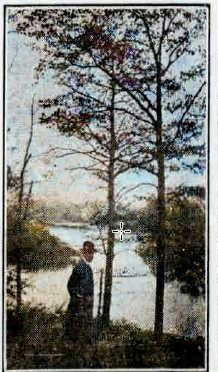
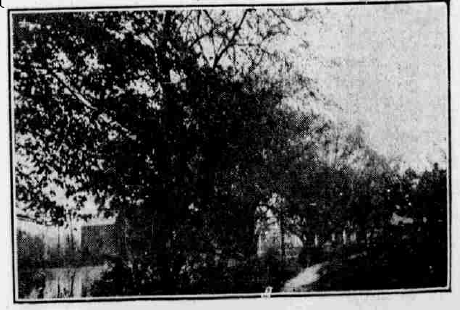
In the woodlands south of the lake I saw thousands of trees, saplings, and bushes which might be culled. out here and there and with little expense transplanted along streets where trees are needed-and there are but few such places-also both saplings and bushes could be trans- planted advantageously in yard where needed. This would aid in the work of clearing out paths and roads in a parking plan a go a long ways in making for greater charm and beauty in the whole town. Perhaps an Arbor Day or Days might be arranged among the good citizens. and by united and co-operative work, each aid the other fellow to further adorn his own plot and garden, to the greater benefit and prosperity of the entire village. In those woods I saw any hundreds of varieties of plant life. With about twenty, in borers, a skilled gardener and competent direction, much transplanting. could be done profitably and at acost mere nominal to the actual value produced by the work.

On many of the U. S. Housing projects of 100, 200 and 300 houses, there was an allotment of nursery stock to each project of as many as 15,000 plants, trees, shrubs, vines, etc.-over 100 plants per house and the plots of ground rarely exceeded 25 by 100 feet per house. This illustrates the importance which the U. S. Government lent to plant life around its houses. Properly set out plants add charm, beauty and enhance property values far in excess of the cost of the plants themselves. As to paths around the park and along all brooks these might be constructed inexpensively by merely marking out the lines of the paths and filling in the pathways with a mixture of sand and gravel to be had in abundance from the gravel, pits in the hills of the woodlands. This same gravel would supply two of the ingredients needed for concrete bridges and other work. should estimate that with the proper utilization of Milltown’s nursery stock, water supply, sand, gravel and electric power plant in the ways I have named, she could add to her loral property values over 50 per cent. I mean that by utilizing these natural resources, each citizen could command 50 per cent higher price for his property holdings were he compelled to sell them. This is a strong statement but I believe, from experience, that it would prove correct, were the work done. Of course it would have to be a co-operative task and one upon which all citizens would have to first agree but this f could be done.

As one may realize, his thought as to a park system, is given without mature study and I have mentioned it only in a hopeful fashion as a big possibility. The plan would involve a greater amount of thought and study that such as it is I have given it freely in this article as only one of the possibilities of Milltown.

Beautifying Factories.

A great deal of thought and work. has of late years been expended on beautifying factories. Few realize how much our offices and places of work consume of our working and leisure time. Why should not these, places be harmonious and as attractive as one’s home? There is but one answer-they should be so.

The National Cash Register Co. of Dayton, Ohio; the Doubleday, Page Co., of Garden City, IL. and hundreds of other great factories have landscaped their buildings and grounds. to such a large extent that they are places of wonderful beauty and attractiveness and this simple expedient has become an asset of tremendous monetary value to such factories. The employees health and working spirit has been quickened. They are rested and refreshed at work and when leaving work and their output has been doubled and trebled merely by the wholesomeness, and beauty by which their shops are surrounded. Curved charts have been made on such work and these charts show that an investment in trees and bushes pay thousands of per cent yield on the capital invest- ed.

Thought of a Wayside Restaurant.

An ideal spot for the location of a family and motorists’ co-operative restaurant is seen from the bridge. I judge that the location would be on Washington avenue, near the railroad tracks. That hillside looks inviting for just such a purpose, and it would take care of the overflow of diners which will surely follow any expansion in Milltown’s present population.

The restaurants in Milltown are fine and hospitable but they will be taxed in the days to come. think you will smile over this idea. of a co-operative vile covered restaurant but look at it from another angle and perhaps we can agree on the matter. Have any of you folks ever stopped to consider that the girls get tired cooking and serving at home every day and that they want a change once in a while from home cooked meals? Then too, women now play a big part in the civic life of every city. Even now they do so in Milltown, Are not your wives, mothers, sweethearts and sisters entitled to this recreation? I am sure you will say they are, so that ends the argument socially. On the other hand, picture the delight of every motorist passing over that bridge and spying pretty way-side restaurant perched up on that hill and then his immediately going there for his chicken dinner. This will bring much money into the town. Every motorist who stops or is induced to stop by reason of a restaurant, leaves about $10 of his money in the town that catches him. A restaurant, by all means, I know you will now say.

A Progressive Community.

A visit to Milltown will prove that it is a progressive town. Its 5.000 citizens. are people with heart, brain and sentiment and this is proven by their homes and the town itself. I should not be surprised to learn that its slogan For the next two years will be Ten Thousand Population.” This will raise it to the classification of a sure enough city.

in point of American loyalty there is probably not a finer town in the entire state. To know this one has but to see the large wooden sign board adorning Main street. near the bridge, with its dozens of names of brave and loyal soldiers who gave up their all to advance the cause of humanity and democracy in the great war which has but ended. Again I would not be surprised to learn that the citizens of Milltown had erected a permanent concrete of granite tablet with copper name plates for each hero on that list, in place of the wooden sign board now in place, These men deserve the tribute and it is worthy of the town as well.

On many sides there was report of the splendid work of the Michelin Tire Company doing their share. in promoting the best interests of the city. I was told that Michelin never intruded into the politics of the town but steadfastly aided and did his part like a man when the opportunity presented. Many of the citizens spoke in favor of paying the Michelin people a tribute so the thought naturally occurred to me what finer tribute could be rendered anyone so helpful, than to

change the name of the town. so that it would bear the name of one of its best citizens. The name “Milltown,” is now slightly misleading, because in no sense is that town a mill town. It is not a place of or for any rough element. but a little city of refinement, charm and real homes. I believe if a new name were voted upon, every single citizen would vote “yes” to the change I have named, as a tribute to the bigness and civic pride of that citizen.